Life on the Grand Strand: The MyrtleBeachCondos.Net Blog

You’ll find our blog to be a wealth of information, covering everything from local market statistics and home values to community happenings. That’s because we care about the community and want to help you find your place in it. Please reach out if you have any questions at all. We’d love to talk with you!

June 3, 2026

The Impact of Interest Rates on Selling Your Myrtle Beach Home

Interest Rates in SC

Interest rates are the single most discussed variable in today's real estate market — and for good reason. When rates rise, buyer purchasing power drops, demand softens, and the terms of a successful sale change. But sellers who understand how rates affect the market can adapt their strategy and still achieve strong outcomes. This guide explains what the current rate environment means for Grand Strand home sellers, and exactly what to do about it.

How Interest Rates Affect Buyer Purchasing Power

The math is direct. At a 6% mortgage rate, a buyer who qualifies for a $2,000 monthly payment can afford roughly a $333,000 loan. At 7%, that same payment gets them approximately $300,000. A one-percentage-point increase in rates reduces purchasing power by roughly 10 to 12 percent. That means the pool of buyers who can qualify for a home at your price point shrinks as rates rise — and the buyers who remain tend to be more cautious, more sensitive to price, and more willing to walk away if a deal does not feel right. For sellers, this means a price that attracted multiple offers 18 months ago may sit longer today. Review the Myrtle Beach real estate market report to understand what buyers are actually paying right now before setting your asking price.

What High Rates Mean for Your Asking Price Strategy

In a high-rate environment, overpricing is more dangerous than ever. Buyers are already stretching to meet their monthly payment — they have no tolerance for a number that feels inflated. Homes priced precisely at market value attract buyers quickly. Homes priced 5 to 8 percent above market sit, accumulate days on market, and eventually sell for less than they would have if priced correctly from day one. The data consistently supports this pattern in the Myrtle Beach market: homes requiring price reductions close at a lower final price than comparable homes priced accurately upfront. Your first 7 to 10 days on market are your most powerful window. Do not waste them with a number buyers will ignore.

Seller Concessions: The New Negotiating Reality

Seller concessions have become a standard part of many transactions in a high-rate environment. The most common is a closing cost credit — the seller credits the buyer a set dollar amount at closing to reduce their out-of-pocket expenses. This is often more effective than a price reduction because it directly addresses the buyer's immediate cash constraint while preserving the recorded sale price. Other concessions include home warranties, pre-negotiated repairs, and mortgage rate buy-downs. If you are preparing to list, factor the likelihood of some form of concession into your net proceeds calculation. The full seller's guide walks through what to expect at every stage of the process, including how to structure concessions without undermining your position.

Rate Buy-Downs: A Powerful Tool for Motivated Sellersbuy down mortgages
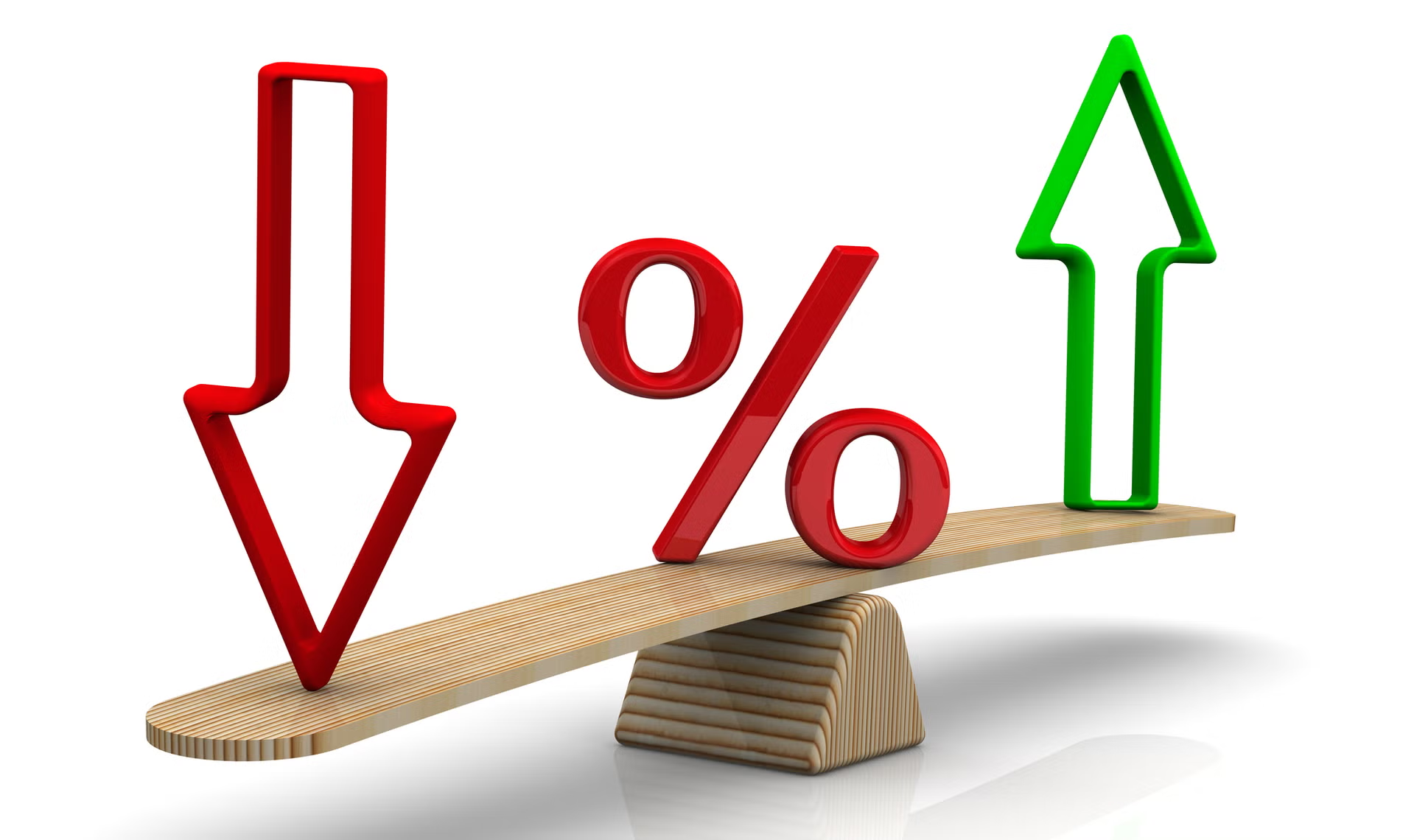
One of the most effective seller tools in a high-rate environment is the mortgage rate buy-down. In this arrangement, the seller pays a fee at closing — typically expressed as "points" — that permanently or temporarily lowers the buyer's interest rate. A popular structure is the 2-1 buy-down: the buyer's rate is reduced by 2 percent in year one and 1 percent in year two, then returns to the note rate from year three onward. For a buyer whose primary concern is the near-term monthly payment, a seller-funded buy-down can be the difference between walking away and closing. The cost to the seller is typically $5,000–$15,000 depending on loan size, but it allows you to hold your asking price while making the deal financially workable for the buyer.

Why the Myrtle Beach Market Holds Up Better Than Most

Rate sensitivity varies significantly by market, and Myrtle Beach has structural advantages that cushion the impact. A substantial share of Grand Strand buyers are cash purchasers — retirees, second-home investors, and vacation rental operators who are not rate-dependent. Demand for coastal living is driven by long-term lifestyle and demographic trends that do not fluctuate with the Fed funds rate. Inventory has remained relatively tight by historical standards, which continues to support pricing even as transaction volume has moderated. The argument that the Myrtle Beach market is heading toward a crash has not materialized, as examined in the data-driven post on why the Myrtle Beach real estate market is not going to crash.

Timing Your Sale: Stop Waiting for Rates to Drop

Many sellers are holding off, waiting for rates to fall before listing. This strategy has a hidden cost: every month you wait, you continue paying your mortgage, taxes, insurance, and maintenance. When rates do fall meaningfully, you will be entering a market flooded with pent-up supply from every other seller who had the same idea. The sellers who consistently do best are the ones who price accurately, market aggressively, and meet the market where it is rather than where they wish it were. If you need to sell, sell. If you have flexibility, make a data-driven decision in consultation with your agent — not one based on hoping conditions improve on their own.

Frequently Asked Questions

Should I lower my asking price because of high interest rates?

Not necessarily — but you must price accurately. The issue is not that rates are high; it is that overpriced homes sit longer in any rate environment, and in a high-rate environment the penalty for overpricing is steeper. A comparative market analysis based on recent closed sales will tell you what buyers are willing to pay right now. Price to that number, not to what you could have gotten 18 months ago, and you will attract qualified buyers quickly.

What is a mortgage rate buy-down and should I offer one?

A mortgage rate buy-down is when the seller pays a fee at closing to reduce the buyer's interest rate, either permanently or for the first few years of the loan. It is most valuable when your buyer pool is sensitive to monthly payment size — which describes most financed buyers in today's market. Whether to offer one depends on your specific situation, your target buyer, and your net proceeds floor. A good listing agent can model the numbers and show you whether a buy-down makes more financial sense than a straight price reduction in your case.

Do cash buyers care about interest rates?

Cash buyers are not directly affected by mortgage rates, but they are aware of them. In a high-rate environment, cash offers become more competitive relative to financed offers because they eliminate financing contingencies and accelerate closing timelines. Cash buyers also understand that rate-constrained financed buyers have less leverage, which can give cash purchasers more room to negotiate. In Myrtle Beach, the proportion of cash transactions is higher than the national average — one reason the market is less rate-sensitive than many coastal markets with fewer investor and retiree buyers.

Should I wait for interest rates to drop before selling?

Waiting for rates to drop is a gamble, not a strategy. Rates are influenced by Federal Reserve policy, inflation, employment data, and global economic variables that no one can reliably predict. Meanwhile, every month you wait costs you in carrying expenses and opportunity. When rates eventually do fall, pent-up supply will flood the market and competition among sellers will intensify. The sellers who tend to do best in transitional markets are those who move decisively with accurate pricing and strong marketing — not those who wait for conditions to become easier.

Are Myrtle Beach home prices falling because of high rates?

As of 2026, Myrtle Beach home prices have moderated from their peak but have not experienced the sharp declines seen in some other markets. Limited inventory, strong in-migration, and a cash-heavy buyer pool have kept values relatively stable. Days on market have increased and price reductions are more common than they were in 2021 and 2022 — but sellers who price accurately and present their homes well are still closing at strong prices. The era of homes selling for 15 percent over asking in a weekend is largely over, but this is still a functional market for prepared sellers.

Abe Safa

Abe Safa

Top Listing Agent | Century 21 Harrelson Group

Abe has lived in Myrtle Beach since 1988. He leads the Abe Safa Sales Team at Century 21 Harrelson Group, specializing in selling homes and condos across the Grand Strand. Known for aggressive marketing, sharp negotiation, calm leadership through closing, and an impeccable track record, putting him in the elite top 1% in the country for listing agents.

📞 (843) 360-2145  /  📧 asafa@c21harrelson.com

Posted in Seller Tips
June 2, 2026

Golf Course Communities vs. Beachfront Living in the Grand Strand

KEY TAKEAWAYS
  • Golf course communities offer quieter full-time living, more square footage per dollar, and community amenities — beachfront living delivers ocean access and strong short-term rental income but comes with higher costs and tourist-season congestion.
  • Beachfront HOA fees are typically higher than golf community fees, reflecting the cost of ocean-facing exterior maintenance, flood insurance, and resort amenities.
  • Short-term rental restrictions vary significantly by community — always verify HOA rental policies before purchasing if income is a priority.
  • Most long-term Grand Strand residents choose golf course or inland communities for primary living and enjoy beach access as a recreational amenity rather than a daily constant.
  • Working with an agent who knows both categories in detail prevents costly mismatches between your lifestyle expectations and the property you buy.

Two of the most common lifestyle choices for Grand Strand buyers are golf course communities and beachfront properties — and they represent very different living experiences. This comparison is designed to help you evaluate which fits your priorities, budget, and long-term goals.

The Case for Golf Course Communitiesgolf-course communities

The Grand Strand is one of the premier golf destinations in the country, with more than 100 courses within driving distance. Communities like Barefoot Resort, Grande Dunes, Pawleys Plantation, Legends Golf Resort, and Heritage Plantation were built around this identity — offering residents not just proximity to great golf, but a quality of life that most find more sustainable for full-time living than the oceanfront alternative.

Golf course homes and condos typically offer more square footage per dollar than comparable beachfront properties. HOA amenities often include pools, clubhouses, fitness centers, and landscaping — all maintained by the community. The environment is quieter, less congested in high season, and more oriented toward permanent residents than tourists. For retirees, remote workers, and families choosing primary residences, golf course communities consistently rank at the top of the preference list.

The Case for Beachfront Livingbeachfront living

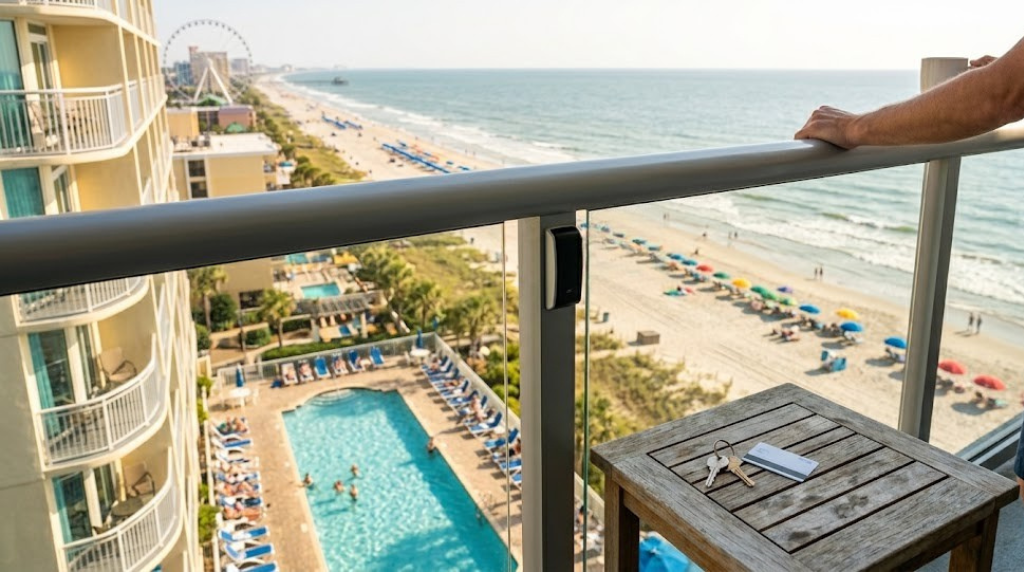
Nothing replaces waking up to direct ocean access. For buyers who have dreamed of that specific lifestyle — coffee on a balcony overlooking the Atlantic, walking to the beach, feeling the salt air — oceanfront properties deliver something golf course communities fundamentally cannot.

Beachfront condos in well-managed buildings are also among the strongest short-term rental performers on the Grand Strand. Tourist demand for oceanfront units is consistent, nightly rates are premium, and occupancy during the May–August season can be high enough to cover carrying costs significantly. For buyers who want to offset their ownership cost with rental income while also using the property personally, a beachfront condo can make strong financial sense. Browse featured Grand Strand beachfront listings to compare current oceanfront inventory across price ranges.

Cost Comparison

For a similar-quality property, beachfront locations command a meaningful premium over golf course communities. An oceanfront condo in a well-maintained building in Myrtle Beach might list at $300,000 to $600,000 depending on size and floor. A comparable-quality residence in a premier golf community like Grande Dunes or Barefoot Resort could be in the same range — but with significantly more square footage and land.

The ongoing cost comparison also favors golf course properties. Ocean-facing exterior maintenance, salt-air corrosion on HVAC and structural elements, and flood insurance requirements push beachfront carrying costs higher. Over a 10-year ownership window, these recurring cost differences can be substantial.

HOA Fees and What They CoverHOA fees

Both property types carry HOA fees, but the structure differs. Beachfront condo associations typically cover building exterior maintenance, roof, common areas, flood insurance for the building envelope, and resort amenities. Monthly fees in established oceanfront buildings often run $500 to $1,000 or more, depending on the building's age and amenity level.

Golf course community HOAs vary widely. Some cover only exterior maintenance and landscaping. Others include golf privileges, club memberships, or resort-style pool and fitness access. The fee range is broad — from $200/month in more modest communities to $600/month or higher in premier developments like Grande Dunes. Always request the HOA's most recent financial statements and reserve fund balance before committing to any purchase in either category.

Short-Term Rental Income Potential

This is one of the most significant differentiators between the two categories. Beachfront condos, particularly those in buildings that allow short-term rentals, have strong gross rental income potential — oceanfront units with a pool command premium nightly rates during peak season. Many owners offset 50–100% of their annual carrying costs through rentals.

Golf course communities are more restrictive. Many HOAs in premier golf communities prohibit or heavily limit short-term rentals to protect the community's residential character. If rental income is an important component of your ownership model, verify the community's rental policy before proceeding. Your agent should pull the HOA documents specifically for rental restrictions. Review the Myrtle Beach home buying guide for guidance on due diligence steps that protect buyers from unexpected restrictions.

Long-Term Value

Both categories have demonstrated appreciation over time, though the drivers differ. Beachfront properties benefit from the fundamental scarcity of oceanfront land — you can't make more of it. Well-maintained buildings in strong locations have appreciated meaningfully over multi-decade ownership periods. Golf course communities in premier developments have also appreciated, driven by lifestyle demand and the quality of the overall community infrastructure.

In both cases, the individual property's condition, the HOA's financial health, and the specific location within the community or building matter more than the category itself. A beachfront condo in a building with a deferred maintenance problem and an underfunded reserve is a worse long-term investment than a well-run golf community property at the same price point.

Making the Right Choice for You

If you're a full-time resident or retiree prioritizing quality of life, quiet, and space — golf course communities almost always win this comparison. If you're a part-time owner who values rental income and is willing to deal with higher maintenance costs and seasonal congestion — beachfront may be the right trade-off. Many buyers in the Grand Strand end up owning both, over time.

Abe Safa has deep experience in both categories across the full Grand Strand, from oceanfront condos to premier golf community estates. His local knowledge goes beyond listings — he knows which buildings have strong reserve funds, which communities have rental-friendly HOAs, and where value is being created ahead of the market. Review Abe Safa's full agent profile and call (843) 360-2145 to talk through which option fits your goals.

Frequently Asked Questions

What are the most popular golf course communities in Myrtle Beach?

Barefoot Resort in North Myrtle Beach, Grande Dunes along the Intracoastal Waterway, Pawleys Plantation and True Blue Golf Resort in Pawleys Island, and Legends Golf Resort near Conway are among the most recognized golf course communities on the Grand Strand. Each offers a distinct character — Barefoot Resort is more resort-oriented, while Pawleys Plantation has an older, more exclusive feel.

Is beachfront property a better investment than golf course property in Myrtle Beach?

Both can be strong investments depending on the property and your goals. Beachfront condos in well-managed buildings have historically shown strong short-term rental income driven by consistent tourist demand. Golf course properties in established communities like Grande Dunes or Barefoot Resort tend to hold value well and attract longer-stay or primary residence buyers. Neither category universally outperforms the other — the specific unit, building management, and HOA financial health matter more than the category.

Are HOA fees higher in beachfront or golf course communities?

Beachfront properties generally carry higher HOA fees, reflecting the cost of maintaining ocean-facing exteriors, salt-air corrosion management, flood insurance, and resort-style amenities. Golf course communities have their own HOA fees that often cover course maintenance, clubhouse amenities, and landscaping. In both categories, HOA fees can vary significantly — always request the full HOA fee breakdown and review the association's reserve fund before purchasing.

Can I rent out a property in a golf course community on Airbnb or VRBO?

It depends on the community's HOA rules. Many golf course communities restrict or prohibit short-term rentals, while others allow them. This is a critical due diligence item — your agent should pull the HOA documents and confirm rental policies before you make an offer if rental income is a priority. Beachfront communities are generally more permissive of short-term rentals, though some condo associations have added restrictions in recent years.

Which is better for full-time living in Myrtle Beach — golf community or beachfront?

Most full-time residents who have lived on the Grand Strand for extended periods gravitate toward golf course communities or inland neighborhoods for their primary residence, using beach access as a recreational amenity rather than a daily constant. Beachfront living comes with noise, traffic, tourist congestion in high season, and higher maintenance costs. Golf course communities offer a quieter environment, more space, and stronger community infrastructure for full-time living. That said, some residents find the oceanfront lifestyle worth every trade-off.


Abe Safa

Abe Safa

Top Listing Agent | Century 21 Harrelson Group

Abe has lived in Myrtle Beach since 1988. He leads the Abe Safa Sales Team at Century 21 Harrelson Group, specializing in selling homes and condos across the Grand Strand. Known for aggressive marketing, sharp negotiation, and calm leadership through closing.

📞 (843) 360-2145 / 📧 asafa@c21harrelson.com / 📺 YouTube

Buying in the Grand Strand? Call or text Abe for expert local guidance.

Posted in Beach News
June 1, 2026

The First-Time Homebuyer's Guide to Myrtle Beach Real Estate

new buyers FAQ

KEY TAKEAWAYS
  • Get pre-approved before you start touring homes — it clarifies your budget, strengthens your offer, and prevents the heartbreak of falling in love with a home you can't finance.
  • FHA loans allow as little as 3.5% down with a 580+ credit score; South Carolina Housing programs may offer additional down payment assistance for qualifying buyers.
  • The Grand Strand has unique buyer considerations that don't apply in most markets: flood zones, HOA rental restrictions, condo association financial health, and seasonal pricing patterns.
  • Closing costs for buyers in South Carolina typically run 2–5% of the purchase price — these should be budgeted separately from the down payment.
  • Most Myrtle Beach transactions close in 30–45 days from accepted offer; having your documentation ready accelerates the lender process significantly.

Buying your first home in Myrtle Beach is one of the most exciting — and most consequential — financial decisions you'll make. Done right, it builds equity, establishes roots, and delivers a quality of life that renting simply can't match. Here is a step-by-step guide to doing it right in the Grand Strand market.

Step 1: Get Pre-Approved Before You Start Shopping

Pre-approval is not a formality — it's the foundation of the entire process. Your lender reviews your income, credit, assets, and debt to determine how much they will lend you and at what interest rate. The resulting pre-approval letter tells sellers you're a serious, qualified buyer, and it tells you the realistic price range to search within.

The distinction between pre-qualification (a quick estimate based on unverified information) and pre-approval (a full underwrite of your financial profile) is significant. In the Myrtle Beach market, sellers are much more receptive to offers accompanied by a pre-approval letter. Explore the Myrtle Beach home buying resources page to understand what lenders look for and how to prepare your documents.

Step 2: Know What You Can Actually AffordKnowing what you can afford

Your pre-approval amount is the ceiling — not the target. Most financial planners recommend keeping total housing costs (mortgage, taxes, insurance, and HOA fees) at or below 28–30% of your gross monthly income. In the Grand Strand, the HOA and insurance components of this calculation can be more significant than buyers coming from inland markets expect.

Run a full monthly cost scenario — not just the mortgage payment. Add estimated property taxes (use 4% of purchase price for primary residence assessment in SC), homeowner's insurance, potential flood insurance, and HOA fees to get a complete picture of what you're committing to monthly before you fall in love with a specific home.

Step 3: Choose the Right Agent

In most markets, buyer's agent services are provided at no direct cost to the buyer (the commission is built into the transaction). But the agent you choose determines how well you navigate the search, offer, inspection, and closing process. A first-time buyer working with an inexperienced agent is one of the most common sources of avoidable mistakes in real estate.

In the Grand Strand specifically, you want an agent who knows the difference between a well-run condo association and one with chronic deferred maintenance, who can read a flood elevation certificate, and who has negotiated enough inspection objections to know what's worth pushing back on.

Step 4: Understand the Grand Strand's Unique Buyer Considerations

Flood zones. The Grand Strand sits on the Atlantic coast. FEMA flood zone designations affect your insurance requirements, insurance cost, and long-term risk profile. Always pull the flood zone designation for any property you're seriously considering. High-risk zones (AE, VE) require flood insurance in addition to homeowner's insurance. Your agent should provide this information proactively.

HOA health. Condo associations in particular have widely varying financial health. Request the most recent budget, reserve fund study, and meeting minutes for any condo you're considering. An association with inadequate reserves is an association heading toward special assessments — unexpected charges levied against all owners to cover major repairs the reserve fund can't pay for.

Rental restrictions. If you're buying with any intention of renting the property — even occasionally — verify the HOA's rental policy before making an offer. Some communities prohibit rentals entirely; others limit minimum rental periods or require prior approval. Browse featured Grand Strand listings to compare properties across communities with different HOA structures.

Step 5: Make Your Offer Strategically

Once you've found the right home, your agent will run a comparative market analysis to establish what the property is worth in the current market. Your offer price should reflect both the market data and strategic considerations: how long the property has been listed, whether there are competing offers, and what contingencies you're including.

Standard contingencies include a home inspection contingency (your right to negotiate or withdraw based on inspection findings) and a financing contingency (your right to withdraw if you can't secure the loan). Waiving either is risky for a first-time buyer unless you have strong reasons and expert guidance.

Step 6: Navigate the Inspection and Appraisal

After the offer is accepted, two critical evaluations happen. The home inspection — performed by a licensed inspector you hire — assesses the property's condition and identifies issues. The appraisal — ordered by your lender — confirms the property is worth what you're paying for it.

The inspection period is typically 10–15 days in South Carolina. Be present for the inspection if possible. Review the report carefully with your agent and decide which findings to request repairs or credits for, and which to accept. Your agent's experience negotiating inspection objections protects your interests here. View recently closed properties to understand typical inspection outcomes and closing prices in your target price range.

Step 7: Close with Confidence

closing with confidenceThe closing process in South Carolina is handled by a licensed attorney (attorney-only closing state). You'll review and sign a substantial set of documents, including the deed, promissory note, and closing disclosure. The closing disclosure — provided at least three days before closing — itemizes all costs. Review it carefully against your Loan Estimate and ask your agent or attorney to explain anything that changed.



Bring certified funds (cashier's check or wire transfer) for the down payment and closing costs. Bring your government-issued ID. Do a final walk-through within 24 hours of closing to confirm the property's condition matches the contract terms.

First-Time Buyer Programs in South Carolina

South Carolina Housing offers several programs specifically designed for first-time buyers. The SC Homebuyer Program provides below-market mortgage rates for eligible first-time buyers and qualifying repeat buyers. The Palmetto Heroes program offers enhanced terms for teachers, healthcare workers, first responders, and law enforcement. Down payment assistance programs may provide a second loan or grant to cover part of your down payment or closing costs, reducing the cash you need to bring to closing. Income limits and purchase price caps apply; your lender can help determine which programs you qualify for.

Frequently Asked Questions

What credit score do I need to buy a home in Myrtle Beach?

Most conventional loan programs require a minimum credit score of 620, though better rates become available at 720 and above. FHA loans — popular with first-time buyers — require a minimum score of 580 with a 3.5% down payment. South Carolina Housing offers programs for first-time buyers that can assist with down payment and closing costs; eligibility requirements vary by program and income level.

How much do I need for a down payment in Myrtle Beach?

The minimum down payment depends on your loan type. FHA loans require 3.5% down with a 580 or higher credit score. Conventional loans can require as little as 3% down for first-time buyers, though 5–20% is more common. VA loans and USDA loans for eligible buyers in qualifying areas can require zero down payment. Down payment assistance programs through South Carolina Housing may be available depending on your income and the purchase price.

Are there first-time homebuyer programs in South Carolina?

Yes. South Carolina Housing offers programs including the SC Homebuyer Program, which provides low-interest mortgage financing for first-time buyers and qualifying repeat buyers. The Palmetto Heroes program provides enhanced terms for teachers, law enforcement, firefighters, and healthcare workers. Down payment assistance programs may cover a portion of your required down payment or closing costs as a forgivable or deferred loan. Income and purchase price limits apply.

What closing costs should I expect when buying in Myrtle Beach?

Buyers in South Carolina typically pay closing costs of 2–5% of the purchase price. These include lender fees (origination, appraisal, credit report), title insurance and settlement fees, prepaid interest, and initial escrow deposits for property taxes and homeowner's insurance. Your lender will provide a Loan Estimate within three business days of your application that itemizes these costs.

How long does it take to buy a home in Myrtle Beach?

From accepted offer to closing, most transactions in the Myrtle Beach market take 30 to 45 days, depending on the loan type and lender processing time. VA and FHA loans can take slightly longer than conventional loans. The search process itself varies widely — some buyers find the right home in days, others take several months. Getting pre-approved before you start searching shortens the overall timeline significantly.


Abe Safa

Abe Safa

Top Listing Agent | Century 21 Harrelson Group

Abe has lived in Myrtle Beach since 1988. He leads the Abe Safa Sales Team at Century 21 Harrelson Group, specializing in selling homes and condos across the Grand Strand. Known for aggressive marketing, sharp negotiation, and calm leadership through closing.

📞 (843) 360-2145 / 📧 asafa@c21harrelson.com / 📺 YouTube

Ready to buy your first home in Myrtle Beach? Call or text Abe for a no-obligation consultation.

Posted in Buyer Tips
May 21, 2026

Curb Appeal Hacks Specifically for Grand Strand Homes

Curb appeal is not a generic concept. What works in a suburb of Columbus looks different from what sells in a coastal market where salt air corrodes metal, humidity warps untreated wood, and buyers arrive already picturing a beach lifestyle. On the Grand Strand, your home's exterior is competing against that mental image. Here are the specific curb appeal improvements that move the needle in Myrtle Beach — from a full exterior repaint to a $50 power wash that transforms a driveway.

curb appeal

Do a Drive-By Assessment Before You Spend a Dollar

Before spending anything, park in front of your property and look at it the way a buyer arriving for a showing would. Then sit at a laptop and compare your home to what is currently selling. Browse recently sold homes in Myrtle Beach and study how the top-performing listings presented their exteriors in photos. This exercise will immediately show you where your property falls short. The goal is to be the best-looking home in your price range — not just an average one.

Exterior Paint: The Highest-Impact Investment

Fresh exterior paint delivers more visual impact per dollar than almost any other improvement. On the Grand Strand, paint degrades faster than in inland markets — UV exposure, salt air, and humidity all accelerate fading and chalking. If your paint is peeling, faded, or chalky, buyers register it before they step out of the car. Choose neutral coastal palettes: soft white, warm gray, sandy beige, or muted coastal blue. These photograph well and appeal broadly to buyers imagining a beach lifestyle. Do not forget the trim, shutters, and fascia — these are often the first things to show age and the details buyers use to judge how well a home has been maintained. A professional repaint typically costs $3,000–$8,000 on a standard Grand Strand home and routinely returns two to three times that in buyer perception and final sale price.

Landscaping Built for the Coastal ClimateNative plants and landscaping-SC

Standard landscaping advice does not always translate to the coast. Buyers in Myrtle Beach expect low-maintenance, salt-tolerant planting that looks intentional rather than overgrown. Native coastal plants — ornamental grasses, sea oats, wax myrtle, muhly grass, and bougainvillea — hold up well and signal that the yard will not require constant replacement. Fresh mulch in all planting beds is one of the cheapest high-impact improvements available before listing — it makes everything look cared for and hides uneven soil. Trim back anything blocking windows or the front entry. Buyers want to see the home, not navigate through the shrubs.

The Front Door and Entry: Best Return Per Dollar

Research on curb appeal consistently identifies the front door as the single highest-return investment. A freshly painted or replaced front door in a confident color — deep navy, coastal teal, matte black, or bold red — stands out in listing photos and creates a strong emotional response at the first showing. Replace corroded hardware: handles, deadbolts, house numbers, and exterior light fixtures. In the salt air of the Grand Strand, metal corrodes visibly within a few years, and outdated or rusted fixtures signal neglect regardless of how clean the rest of the home is. A new doormat, potted plants flanking the entrance, and coordinated porch lighting complete the picture. Budget $300–$800 for a full entry refresh and expect outsized visual returns. Before investing in any improvements, use a free home price estimate tool to establish your baseline value and determine how much improvement makes financial sense.

Power Washing: The Cheapest Big Transformationpressure washing/curb appeal

Myrtle Beach driveways, walkways, and siding accumulate mold, mildew, algae staining, and salt residue quickly — especially in shaded or north-facing areas. A professional power wash of the driveway, walkway, front porch, and siding removes years of buildup and restores the original color of your surfaces. This is one of the cheapest high-impact seller improvements available — typically $150–$400 for a full exterior — and it dramatically improves how a property photographs. If your concrete is stained beyond what power washing can fix, a driveway sealant or resurface for a few hundred dollars more can make a striking visual difference. Clean hardscaping is something buyers notice and sellers regularly overlook.

Lighting and the Twilight Photography Advantage

Buyers look at listings at all hours and drive by properties in the evening. Solar-powered path lights along the front walk and updated porch fixtures create a welcoming look after dark. For photography, coordinate with your agent about a twilight shoot — capturing the property with interior lights glowing, exterior fixtures on, and a deep blue sky in the background produces listing images that stand out sharply from standard daytime shots. Coastal properties near the water, with pools or outdoor living areas, see especially strong results from twilight photography. In a competitive listing environment, better photos translate directly to more showing requests. The guide on selling your condo in a buyers market covers how presentation and marketing work together to drive competitive offers even when conditions soften.

Frequently Asked Questions

How much should I invest in curb appeal before listing?

Most listing agents recommend spending no more than 1 to 2 percent of your expected sale price on pre-listing improvements including curb appeal. The goal is to look well-maintained and move-in ready — not to over-improve beyond what the neighborhood supports. For a $400,000 home, that means $4,000–$8,000 targeted at the highest-visibility items: exterior paint, the front entry, and landscaping cleanup. Avoid major capital projects like new driveways or roofs unless they are genuinely necessary for the home to pass inspection.

What is the biggest curb appeal mistake Grand Strand sellers make?

The most common mistake is not seeing what is actually there. When you live in a home for years, you stop noticing the peeling trim, the overgrown shrubs, or the mildew on the driveway. Get an outside perspective — ask your listing agent to walk the exterior with fresh eyes and be direct about what buyers will notice. The second most common mistake is over-improving: spending money on major landscaping renovations or hardscaping projects that will not be recovered in the sale price.

Does curb appeal matter more for coastal properties than other homes?

Yes, significantly. Buyers purchasing in a coastal market are motivated by lifestyle aspirations alongside practical needs. They want the property to feel like a beach retreat from the moment they pull up. A home with strong coastal curb appeal — clean exterior, well-maintained landscaping, a fresh entry, and good lighting — activates that emotional response in a way that matters especially for vacation home and second-home buyers, who often decide whether to schedule a showing based solely on exterior photos.

What should condo sellers do about curb appeal?

Condo sellers do not control the building exterior, but they control their balcony, their unit's front door area, and how their unit is presented online. Keep the balcony uncluttered and intentionally styled with some furniture and a plant or two. Your front door should be clean with an updated doormat. In listing photos, an open balcony door with ocean or pool views visible behind it is one of the most compelling images you can include. These details are within your control regardless of building age or HOA restrictions.

How important is curb appeal for online listings versus in-person showings?

Both matter — but online curb appeal has become increasingly decisive because most buyers determine whether to book a showing based entirely on listing photos. The exterior shot is typically the first or second image in a listing and is a primary factor in whether a buyer clicks through. Your online curb appeal must generate showings; your in-person curb appeal must live up to the photos when buyers arrive. Inconsistency between photos and reality is one of the fastest ways to lose a buyer before they step inside.

Abe Safa

Abe Safa

Top Listing Agent | Century 21 Harrelson Group

Abe has lived in Myrtle Beach since 1988. He leads the Abe Safa Sales Team at Century 21 Harrelson Group, specializing in selling homes and condos across the Grand Strand — known for aggressive marketing, sharp negotiation, and calm leadership through closing.

📞 (843) 360-2145  /  📧 asafa@c21harrelson.com

Posted in Seller Tips
May 20, 2026

What Disclosures Are Required When Selling a Home in SC?

South Carolina law requires sellers to disclose known material defects and certain specific conditions about a property before closing. Failure to disclose can expose sellers to legal liability even after the sale is complete. Understanding what's required — and what's not — protects both parties and keeps transactions moving forward without surprises.disclosure

South Carolina's Residential Property Disclosure Act

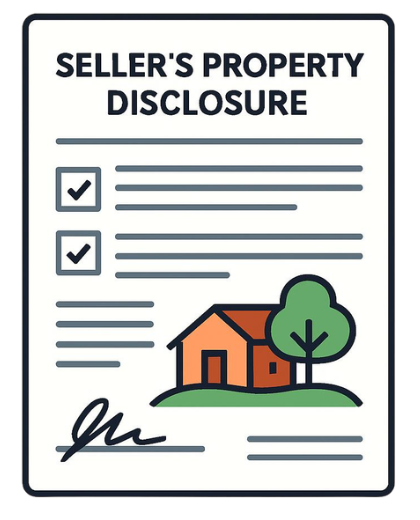
South Carolina's Residential Property Condition Disclosure Act requires sellers of residential property to complete a standardized disclosure form before the buyer makes a written offer. This form covers the physical condition of the property as known to the seller at the time of listing. The law applies to most residential real estate transactions, with limited exceptions such as transfers between family members and new construction covered by a builder warranty.

The disclosure form requires sellers to answer questions about the property's condition in three categories: Yes (known issue), No (no known issue), or No Representation (seller declines to make a representation). Choosing "No Representation" has implications — buyers and their agents often view it as a red flag, and it doesn't necessarily shield sellers from liability for knowingly concealing a defect.

What Must Be Disclosed in South CarolinaSPD - Sellers Property Disclosure

The South Carolina disclosure form covers a broad range of property conditions. Sellers must disclose known issues with: the roof and attic, foundation and structural components, basement and crawl space, electrical systems, plumbing, HVAC systems, water and sewer systems, environmental hazards, drainage and flooding, and any legal or zoning issues affecting the property.

Specific items South Carolina sellers commonly need to address include: history of water intrusion or flooding, known pest infestations or termite damage, presence of lead paint (required federally for homes built before 1978), asbestos, radon, mold or moisture issues, unpermitted additions or improvements, boundary disputes, and HOA violations or assessments. If you're preparing to sell your Myrtle Beach home, reviewing the state disclosure form early in the process — before listing — helps you identify and address issues proactively rather than mid-contract.

Federal Disclosures That Apply in South Carolina

In addition to state-required disclosures, federal law imposes separate disclosure obligations. The most significant is the Lead-Based Paint Disclosure, required for all residential properties built before 1978. Sellers must provide buyers with an EPA-approved pamphlet about lead paint hazards, disclose any known lead paint presence, and allow buyers a 10-day window for lead paint inspection before the contract becomes binding.

Flood zone status is another federally relevant disclosure. In Myrtle Beach, where many properties lie in FEMA-designated flood zones, sellers should be prepared to disclose whether the property requires flood insurance and provide FEMA flood zone information. Buyers often discover flood zone status on their own through lender requirements, but proactive disclosure avoids disputes.

Condo-Specific Disclosures in the Grand Strand

Condo sellers in Myrtle Beach face additional disclosure considerations beyond those for single-family homes. HOA financial health, pending special assessments, known structural issues within the building, rental restrictions, and current litigation involving the HOA are all material to a buyer's decision. While South Carolina law doesn't require a standardized HOA disclosure package in all cases, withholding known information that would affect a buyer's decision can still create liability.

Buyers working with experienced agents will request HOA documents — meeting minutes, reserve fund studies, master insurance certificates — as part of due diligence. Understanding what buyers look for when evaluating a Grand Strand condo helps sellers prepare for these requests and avoid delays caused by incomplete documentation.

What Happens If You Fail to Disclosedisclosures in SC real estate

Non-disclosure claims in South Carolina real estate are taken seriously. Sellers who knowingly fail to disclose material defects can face rescission of the sale, damages, and attorney's fees. The statute of limitations for disclosure claims in South Carolina is typically three years from the date the buyer discovers — or reasonably should have discovered — the undisclosed defect.

The "as-is" listing designation does not protect sellers from non-disclosure liability. Selling as-is means you won't make repairs, not that you don't have to tell buyers about known problems. The two concepts are legally distinct. Working with a knowledgeable listing agent and real estate attorney to complete disclosures accurately is the most reliable protection available. Choosing the right listing agent in Myrtle Beach means working with someone who understands these obligations and guides you through the process carefully.

Frequently Asked Questions

Do I have to disclose a death that occurred in my Myrtle Beach home?

South Carolina does not require sellers to disclose that a death occurred on the property unless it involved a homicide or if the seller is directly asked. Natural deaths, accidents, and suicides are generally not required disclosures under state law, though sellers who are asked directly should answer honestly to avoid misrepresentation claims.

What if I genuinely don't know about a defect?

Disclosure obligations apply to known conditions. You cannot be required to disclose what you genuinely don't know. However, if you had reason to investigate — visible water stains, past complaints from tenants, prior inspection reports — a court may find that you should have known. The standard is what a reasonable person in your position would have known, not just what you personally were aware of.

Can a buyer sue me after closing for something I didn't disclose?

Yes. South Carolina buyers have up to three years to file a claim from the point of discovery. If a defect surfaces after closing that the seller knew about and concealed, the buyer has grounds for a lawsuit. This is why complete and honest disclosure at listing time is the strongest legal protection available to sellers.

What disclosures apply specifically to beach and oceanfront properties?

Oceanfront and near-beach properties in Myrtle Beach may require disclosure of erosion history, bulkhead condition, proximity to setback lines, and any DHEC (Department of Health and Environmental Control) permits or restrictions on the property. Flood zone classification and flood insurance history are also particularly relevant for coastal properties.

Should I get a pre-listing inspection before completing my disclosures?

Yes — in most cases, a pre-listing inspection is one of the highest-value investments a seller can make. It surfaces issues before buyers find them, allows you to make repairs or price accordingly, and demonstrates transparency that builds buyer confidence. Sellers who complete pre-listing inspections often experience smoother transactions with fewer mid-contract surprises.

Abe Safa

Abe Safa

Top Listing Agent | Century 21 Harrelson Group

Abe has lived in Myrtle Beach since 1988. He leads the Abe Safa Sales Team at Century 21 Harrelson Group, specializing in selling homes and condos across the Grand Strand. Known for aggressive marketing, sharp negotiation, calm leadership through closing, and an impeccable track record, putting him in the elite top 1% in the country for listing agents.

📞 (843) 360-2145  /  📧 asafa@c21harrelson.com

Posted in Seller Tips
May 19, 2026

Why Your Myrtle Beach House Isn't Selling (And Exactly How to Fix It)


A home sitting on the market in Myrtle Beach costs you more than time. It costs you negotiating power, buyer confidence, and in some cases, real money. When a listing stalls, buyers notice — and they start wondering what's wrong. The good news is that most stalled listings have fixable problems. Here's how to diagnose yours and turn things around.

why is my Myrtle Beach SC home not selling

The Price Is Wrong

Overpricing is the most common reason homes don't sell in the Grand Strand. Sellers often anchor to what they paid, what a neighbor got two years ago, or what they need to net. None of those numbers matter to buyers. What matters is what the market will bear right now. If your home has been sitting for more than 21 days without an offer, price is almost certainly part of the problem.

The fix: pull a fresh comparative market analysis and price based on what has actually closed in the last 60 to 90 days — not what's listed. Check the current Myrtle Beach real estate market report to understand where pricing pressure is coming from in your specific area. A 3 to 5 percent price adjustment often reignites buyer traffic immediately.

The Listing Presentation Is Weak

In a market where buyers shop online before they ever schedule a showing, photos and the listing description are your first showing. Dark photos, poor angles, cluttered rooms, and a generic description are all conversion killers. Buyers scroll fast. If your photos don't stop the scroll, they move on.

The fix: hire a professional real estate photographer. It costs a few hundred dollars and consistently produces more showing requests and higher offers. Pair the new photos with a rewritten description that leads with lifestyle and emotion, not square footage and appliance brands.

The Home Isn't Show-Ready

Buyers in Myrtle Beach are often comparing your home to new construction, recently renovated condos, and professionally staged properties. If your home shows dated, cluttered, or poorly maintained, buyers will either pass or come in low. First impressions are made in seconds and they're very hard to reverse.

The fix: declutter aggressively, depersonalize, deep clean, and address any deferred maintenance that's visible during a showing. Fresh paint in neutral colors, updated light fixtures, and clean landscaping are high-return, low-cost improvements. Consider a pre-listing home inspection so you can address issues before buyers find them.

The Marketing Isn't Reaching the Right Buyers

If your agent's marketing strategy begins and ends with the MLS, you're missing a large portion of the buyer pool. Grand Strand buyers come from across the country — Northeast retirees, Midwest investors, Southeast vacation home buyers. Reaching them requires targeted digital advertising, social media exposure, and email marketing to buyer databases.

If you're thinking about relisting or switching agents, start with an honest evaluation of your current Myrtle Beach selling strategy. Marketing that reaches out-of-state buyers — where the majority of Grand Strand purchasers originate — can dramatically shorten days on market.

The Terms Are Creating Frictionterms and negotiation

Sometimes the home and price are right but the terms are turning buyers away. Restrictive showing hours, no lockbox, requests for long due diligence periods, excessive seller contingencies, or an unwillingness to contribute to closing costs can all kill deals before they start. Buyers in a balanced market have options — if your listing creates friction, they'll find one that doesn't.

The fix: review your showing instructions and seller terms with fresh eyes. Make it as easy as possible for buyers to see your home and write an offer. You can review seller strategies for a softer market to understand where today's buyers expect flexibility.

The Agent Isn't Executing

Not all listing agents bring the same level of effort, expertise, or resources to a sale. If your agent isn't proactively communicating feedback, adjusting strategy based on market data, and bringing creative solutions when a listing stalls — that's a problem. A passive approach in a competitive market produces passive results.

The fix: have a direct conversation with your agent about what isn't working and what changes they recommend. If they don't have clear answers, it may be time for a change. The right listing agent should have a documented plan for every week a home is on the market.

For Sale FAQFrequently Asked Questions

How long is too long for a home to sit on the market in Myrtle Beach?

In most Myrtle Beach submarkets, more than 30 days without an offer is a signal that something needs to change. That could be price, presentation, marketing, or a combination. The longer a listing sits, the more buyer skepticism builds — acting quickly when a listing stalls is almost always the right call.

Will dropping the price help if my Myrtle Beach home isn't selling?

A price reduction is often necessary, but it's not always sufficient on its own. If the home has other issues — poor photos, deferred maintenance, weak marketing — a price cut will generate traffic that still doesn't convert. Address the full picture, not just the number.

Should I take my home off the market and relist later?

Relisting can reset the days-on-market counter on some platforms, but savvy buyers and their agents can still see the listing history. A better approach is to fix the underlying issues, update the photos and description, and relist with a meaningful price adjustment rather than just waiting.

How do I know if my listing agent is doing enough to sell my home?

Your agent should be providing weekly updates, sharing showing feedback, reporting on online traffic and inquiries, and making proactive recommendations. If you're hearing nothing and seeing no results, that's not a market problem — that's an execution problem.

What's the fastest way to sell a stalled listing in Myrtle Beach?

The combination that works most reliably: a meaningful price adjustment (not a token cut), new professional photos, a rewritten listing description, and expanded digital marketing. In most cases, a listing that implements all four of these changes will see renewed activity within one to two weeks.

Abe Safa

Abe Safa

Top Listing Agent | Century 21 Harrelson Group

Abe has lived in Myrtle Beach since 1988. He leads the Abe Safa Sales Team at Century 21 Harrelson Group, specializing in selling homes and condos across the Grand Strand. Known for aggressive marketing, sharp negotiation, calm leadership through closing, and an impeccable track record, putting him in the elite top 1% in the country for listing agents.

📞 (843) 360-2145  /  📧 asafa@c21harrelson.com

Posted in Seller Tips
May 17, 2026

The Power of Video Tours for Selling Myrtle Beach Properties

A significant portion of Myrtle Beach real estate buyers never see a property in person before making an offer. They're researching from Ohio, New York, Michigan, and Ontario — browsing listings on their laptop, watching videos on their phone, and making decisions based entirely on what they can see from a distance. For these buyers, a well-produced video tour isn't a nice-to-have. It's the showing.

Virtual Tours

Why Video Outperforms Photos for Remote Buyers

Photos show individual moments frozen in time — a kitchen angle, a bedroom corner, a balcony view. Video shows flow. It communicates how a unit actually feels to walk through: the ceiling height as you enter, the way natural light moves through the living room, the actual proximity of the ocean from the balcony. For buyers making a decision remotely, that experience of movement and context is often what converts interest into an offer.

Listings with video content consistently generate longer online engagement times and more inquiry conversions than photo-only listings. In a market like Myrtle Beach — where the lifestyle is as much a part of the sale as the property itself — video is the most effective tool for communicating that lifestyle before a buyer ever visits.

Types of Video That Work for Grand Strand Properties

Walkthrough videos are the foundation. A smooth, well-lit interior tour that moves logically through the property — entry, living spaces, kitchen, bedrooms, bathrooms, outdoor areas — gives remote buyers the closest substitute to a live showing. Keep the pace deliberate enough to let buyers absorb details without making the video feel slow.

Drone and aerial footage adds critical context for Myrtle Beach properties. Buyers want to understand proximity to the beach, building orientation, parking, pool location, and surrounding neighborhood character. A 60-second aerial clip answers questions that a dozen interior photos cannot. For oceanfront and golf-course properties, aerial footage often becomes the most-watched segment of the listing video.

Drone footage and video

Neighborhood and lifestyle footage extends the sale beyond the four walls. Clips of the nearby beach access, golf courses, restaurants, and boardwalk remind buyers what they're actually buying — a way of life. This type of content performs especially well on social media, where it reaches buyers who haven't yet identified a specific property but are dreaming about the Grand Strand lifestyle.

How Video Shortens Days on Market

Buyers who watch a full property video before scheduling a showing are more qualified and more committed than those who haven't. They've already done a significant portion of the evaluation work — they know the layout, they've seen the condition, they understand the space. Showings from video-engaged buyers convert to offers at higher rates than cold showings.

This also reduces wasted showing time for sellers. Buyers who would have come in-person and been disappointed by something they could have seen in a video never book the showing. The result is fewer showings overall, but a higher percentage of those showings resulting in offers. You can browse Abe Safa's recently sold Myrtle Beach properties to see how video-supported listings have performed across price points and property types in the Grand Strand.

Video for Condos vs. Single-Family Homes

Condo video tours require particular attention to flow and space perception. Condos are often smaller than single-family homes, and poorly shot video can make them feel cramped. Wide-angle lenses, bright lighting, and a logical movement pattern help condos present their best. Highlight the unit's unique features — updated finishes, water views, balcony size — that justify the price relative to comparable units. If you're preparing to sell your Myrtle Beach condo, understanding how video can differentiate your listing within a building full of similar units is an important part of your strategy.

Single-family homes benefit most from the combination of interior walkthrough and drone footage. The lot, backyard, curb appeal, and neighborhood context all matter more for homes than for condo units in high-rise buildings. Allocate video time proportionally — more interior time for condos, more exterior and aerial time for homes.

Distribution: Where Your Video Needs to Be

A well-produced video only creates value if buyers can find it. YouTube is the preferred platform for long-form property videos — it's searchable, embeddable, and performs well in Google search results. Facebook and Instagram are ideal for shorter, edited cuts optimized for the feed. Your listing agent's website, Zillow listing, and Realtor.com profile should all embed the video directly. Active Myrtle Beach condo listings that include embedded video consistently attract more buyer engagement than listings that link out to external platforms.

Frequently Asked Questions

How long should a Myrtle Beach property video tour be?

For a full walkthrough video distributed on YouTube and embedded in listings, 3 to 6 minutes is the standard range. Shorter social media cuts — 60 to 90 seconds — work better for Instagram and Facebook ads. Most buyers will watch a 4-minute walkthrough if the property holds their interest, but the first 30 seconds must hook them or they'll move on.

Who pays for the video production when selling a Myrtle Beach home?

In most cases, the listing agent absorbs video production costs as part of their marketing package. Top Grand Strand agents include professional photography and video as standard offerings. If your agent charges extra for video or doesn't offer it at all, that's worth factoring into your evaluation of their marketing capabilities before signing a listing agreement.

Can I use a video tour to sell a vacant property?

Yes, and vacant properties often benefit more from video than furnished ones because buyers struggle to visualize scale without furniture. Virtual staging overlaid on video footage is an option for vacant properties. Even without staging, a clean, well-lit walkthrough of a vacant space is significantly more effective than still photos for helping buyers understand the layout.

Do video tours help in a slower market?

Especially so. In a buyer's market, every listing is competing harder for buyer attention. Video content that's engaging and professionally produced keeps your listing in consideration longer and reaches more passive buyers who haven't made a firm decision yet. In slower markets, listings with strong video content consistently outperform those relying on photos alone.

What's the difference between a video tour and a virtual tour?

A video tour is a produced, linear walkthrough — the viewer watches it like a film. A virtual tour (such as a Matterport 3D scan) lets buyers control the navigation, moving through the space in any direction at their own pace. Both have value. Video tours perform better for emotional engagement and social sharing; virtual tours give serious buyers the ability to measure, reference, and revisit specific spaces in their own time.

Abe Safa

Abe Safa

Top Listing Agent | Century 21 Harrelson Group

Abe has lived in Myrtle Beach since 1988. He leads the Abe Safa Sales Team at Century 21 Harrelson Group, specializing in selling homes and condos across the Grand Strand. Known for aggressive marketing, sharp negotiation, calm leadership through closing, and an impeccable track record, putting him in the elite top 1% in the country for listing agents.

📞 (843) 360-2145  /  📧 asafa@c21harrelson.com

Posted in Seller Tips
May 16, 2026

How to Sell a Tenant-Occupied Property in Myrtle Beach

Owning a rental property in Myrtle Beach is a solid investment — until you decide to sell and realize your tenant complicates almost every step of the process. Scheduling showings, staging the home, timing the closing — all of it becomes more layered when someone else is living there. But selling a tenant-occupied property is done successfully every day on the Grand Strand, and with the right approach it does not have to be contentious, drawn-out, or financially damaging. Here is what you need to know.

Leases and Tenants in SC

Know South Carolina Tenant Rights Before You Do Anything

South Carolina law requires landlords to give tenants at least 24 hours notice before entering the property for showings, inspections, or appraisals. If your tenant is on a fixed-term lease, you generally cannot force them to vacate before the lease ends simply because you have decided to sell — the new owner takes on the lease obligation at closing. Month-to-month tenants must receive a 30-day written notice to vacate. Understanding these rules before you list protects you legally and prevents your transaction from being derailed by a tenant who knows their rights. Before you put a sign in the yard, review your current lease terms carefully and consult with your agent about timing. For a full overview of selling your Myrtle Beach property, start with a clear-eyed look at your obligations as a landlord-seller.

Decide: Sell With Tenants In Place or Wait for Vacancy?

This is the first strategic question every landlord-seller faces, and the right answer depends on your lease situation, your timeline, and your target buyer. Selling with a tenant in place narrows your buyer pool — owner-occupants typically want to move in immediately, so you will primarily attract investors. Selling vacant opens the door to a much wider pool of buyers including families and retirees. The tradeoff is time and carrying costs. If your tenant has four months left on their lease, waiting for vacancy might mean losing four months of market momentum and paying a mortgage without rental income. Run the numbers: what does each extra month cost you, and does the wider buyer pool justify it?

How to Price a Tenant-Occupied Property

Investor buyers do not price homes the way owner-occupants do. They are running cap rate calculations based on the current lease terms, monthly rent, and the property's operating expenses. A well-priced tenant-occupied property that delivers strong cash flow can actually command a premium with the right investor buyer — especially in Myrtle Beach, where rental demand is year-round. Make sure you can provide documentation: the current lease, rent payment history, any security deposits held, and the lease expiration date. Buyers who see clean records and a reliable tenant are more likely to move quickly and ask for fewer concessions.

Managing Showings Without Alienating Your Tenanttenants and selling in SC

Your tenant's cooperation can make or break your listing. A tenant who is resentful, unresponsive to showing requests, or leaves the property in poor condition for tours will cost you time and money. The most effective approach is honest, early communication. Tell your tenant in writing that you plan to sell, explain what the process involves, and give them as much scheduling flexibility as possible. Some landlords offer a small rent reduction or one-time payment in exchange for cooperation with showings — this is often money well spent. Never try to force a tenant out or make conditions uncomfortable in order to pressure them to leave. In South Carolina, that can constitute illegal harassment and expose you to significant liability. Professional rental property management guidance can help you navigate tenant communications if the relationship is already strained.

What Happens to the Lease at Closing

This is the question buyers ask most often, and it matters. When a tenant-occupied property sells in South Carolina, the existing lease transfers to the new owner. The new owner must honor the lease terms — including the rent amount, the expiration date, and the security deposit — until the lease ends. The tenant's rights do not change simply because the property sold. This is important to disclose clearly in your listing so buyers understand what they are agreeing to before they make an offer. Buyers who do their due diligence and review the lease before closing will have no surprises — and a smooth closing is good for everyone.

Targeting Investor Buyers Effectively

Most tenant-occupied sales in Myrtle Beach end up with investor buyers, and that is not a bad outcome. The Grand Strand has a deep pool of experienced real estate investors who understand occupied properties and know how to evaluate them. To attract the right buyers, your listing needs to clearly communicate the investment case: current monthly rent, lease expiration date, estimated cap rate, and any recent improvements. Gross rental yield and net operating income estimates go a long way toward helping investor buyers make fast decisions. You can browse Abe Safa's recently sold properties to see the range of transactions he has closed, including investment and income-producing properties throughout the Grand Strand.

Frequently Asked Questions

Can I sell my property while tenants are still living there in South Carolina?

Yes. You have the legal right to sell your property at any time, even with a tenant in place. However, you must give tenants proper notice before entry for showings and inspections, and you must honor the existing lease terms. If the tenant is on a fixed-term lease, the new owner takes on the lease at closing. If the tenant is month-to-month, you can give 30 days written notice to vacate before listing if you prefer to sell vacant.

How much notice do I have to give tenants before showing the property?

South Carolina law requires a minimum of 24 hours notice before a landlord can enter the property for any reason, including showings, inspections, and appraisals. Best practice is to give more notice when possible and to schedule showings at times that are least disruptive to your tenant. Tenants who feel respected are far more likely to keep the home presentable and accommodate your showing schedule.

Will having a tenant hurt my sale price?

It depends on the buyer pool. For owner-occupant buyers, an occupied property typically requires a price adjustment because they cannot move in immediately. For investor buyers, a well-documented, reliable tenancy can actually support a stronger price — especially if the rent is at or above market rate and the tenant has a clean payment history. The net impact depends on how you market the property and who you are targeting.

What happens to the security deposit when I sell?

The security deposit must be transferred to the new owner at closing and disclosed in the transaction. The new owner becomes responsible for the deposit and must return it to the tenant at the end of the lease per South Carolina law. Failing to properly transfer and disclose the security deposit can create legal complications at closing, so make sure your agent and closing attorney handle this correctly.

Should I try to buy out my tenant before listing?

Sometimes, yes. If your tenant is willing to vacate early in exchange for a cash payment — often called "cash for keys" — it can be worth it to expand your buyer pool and simplify the sale. A typical arrangement might involve paying one to two months of rent in exchange for the tenant vacating by a specific date. This should always be done in writing with a signed agreement. Never use pressure tactics or try to make the unit uninhabitable — that is illegal and will cost you far more than the cost of a buyout.

Abe Safa

Abe Safa

Top Listing Agent | Century 21 Harrelson Group

Abe has lived in Myrtle Beach since 1988. He leads the Abe Safa Sales Team at Century 21 Harrelson Group, specializing in selling homes and condos across the Grand Strand. Known for aggressive marketing, sharp negotiation, calm leadership through closing, and an impeccable track record, putting him in the elite top 1% in the country for listing agents.

📞 (843) 360-2145  /  📧 asafa@c21harrelson.com

Posted in Seller Tips
May 15, 2026

The Seller's Checklist: Getting Ready for High-Season Buyers

High season in Myrtle Beach is not just beach weather — it is prime selling season. From late spring through early summer, motivated buyers flood the Grand Strand: retirees looking to relocate, out-of-state investors chasing rental income, and families eager to close before school starts. The sellers who cash in on this demand are not the ones who list overnight. They are the ones who prepared weeks in advance. This checklist covers every step.

Understand the High-Season Advantage

Seasonal timelines in real estate

The math is simple: more buyers competing for your home means stronger offers. In a typical high-season market along the Grand Strand, well-prepared listings see more showings in the first weekend than a poorly prepared home might see in a month. Browsing recently sold properties in Myrtle Beach gives you a clear picture of what buyers are paying right now — and how quickly properly priced homes are moving. When inventory is tight and demand is high, preparation is the difference between one offer and five.

Price It Right From Day One

High season demand does not mean you can name any number. Overpriced homes still sit, even when buyers are hungry — because today's buyers are well-informed. They are running comps on their phones in your driveway. Your first 7 to 10 days on market are your most valuable window of exposure. If you price too high and chase the market down, you signal desperation and lose leverage. A FREE CMA - comparative market analysis, anchored to recent closed sales in your neighborhood, is the foundation of your strategy. Use a free home price estimate tool to get a data-backed starting point before you set your number.

Curb Appeal, Staging, and Deep Cleaning

curb appeal Buyers during high season are often touring multiple homes the same day. Your job is to be the one they keep thinking about after they leave. That starts before they even walk through the door. Power wash the driveway, trim the hedges, and repaint or replace the front door if it looks tired.
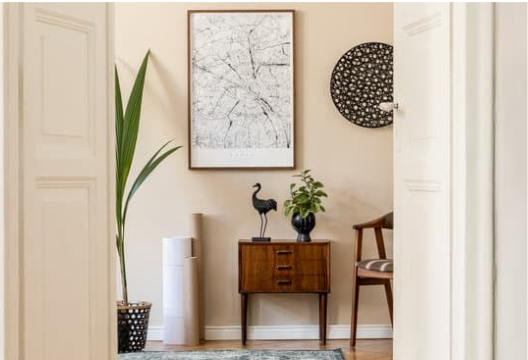
Inside, remove personal photos, excess furniture, and anything that makes rooms feel smaller. A professional deep clean — including windows, baseboards, and appliances — makes a measurable difference. In condo listings especially, clear counters and neutral decor let buyers imagine their own life in the space. For occupied homes, consider renting a storage unit for 30 days to move out the clutter.

Pre-Listing Repairs and Disclosure Prep

Nothing kills momentum in a real estate transaction faster than surprises during inspection. The smart move is a pre-listing inspection — hire your own inspector, find the issues, and either fix them or price them in. South Carolina sellers are required to disclose known material defects, so getting ahead of this protects you legally and builds buyer confidence. Common inspection flags in Grand Strand properties include HVAC age and condition, moisture or mold in crawl spaces or condo units near the beach, plumbing age, and roof condition. Handling these before you list means you negotiate from strength, not from a position of damage control.

Professional Photography and Strategic Marketing

Photos, staging and more

In 2026, buyers make up their minds about a home before they ever visit it — based on photos and video. Professional photography is not optional.

Drone footage and aerial shots are especially powerful for beachside properties, showcasing proximity to the water, pool areas, and community amenities.

A 3D virtual tour or walkthrough video captures out-of-state buyers who cannot drive through on a Tuesday afternoon. Your listing should also be syndicated across all major platforms and promoted on social media. When you work with an experienced Grand Strand listing agent, these marketing tools come standard. Review Abe Safa's listing approach and track record to understand what a full-service marketing strategy looks like in practice.

Time Your Launch for Maximum Impact

Listing day matters. Real estate data consistently shows that homes listed on Thursday or Friday get more showings over the weekend — the peak browsing period for buyers. Do not rush the listing live before your photography is done or your home is ready. A listing that launches clean, priced correctly, and fully photographed on a Thursday will almost always outperform one that launches Monday in a half-ready state. Coordinate your go-live date with your agent, your photographer, and your cleaning crew. Treat it like a product launch — because it is.

Frequently Asked Questions

When is high season for real estate in Myrtle Beach?

The primary high season for real estate in Myrtle Beach typically runs from late March through July, with a secondary window in September and October. Spring listings benefit from the highest buyer traffic before summer vacation rentals consume buyer attention. If you are flexible on timing, listing in April or May tends to produce the strongest results.

How far in advance should I start preparing my home?

Plan for at least four to six weeks of preparation before your target listing date. This gives you time to complete repairs, hire a photographer, order any staging help, and have your disclosure documents ready. Rushing the process is one of the most common and costly mistakes sellers make — especially in a competitive market where first impressions are everything.

What repairs have the highest return before listing?

In the Myrtle Beach market, the highest-return pre-sale improvements tend to be fresh interior paint, updated light fixtures, professional landscaping, and a deep clean. HVAC servicing is also high value — buyers and inspectors will flag a unit that has not been serviced recently. Major renovations like kitchen gut jobs rarely return full dollar for dollar; targeted cosmetic updates do.

Does home staging really make a difference in this market?

Yes, particularly for vacant properties. A professionally staged condo or home photographs better, shows better, and typically sells faster than an empty one. Buyers struggle to scale empty rooms and tend to feel less emotionally connected to vacant spaces. Even basic staging — a few key pieces of furniture and tasteful decor — can meaningfully shorten your time on market and improve your final sale price.

Should I be present during showings?

No — and most experienced agents will tell you this directly. Sellers present during showings make buyers uncomfortable. Buyers hesitate to open cabinets, linger in rooms, or have honest conversations with their agent when the owner is watching. Leave the home during every showing, take your pets with you, and let your listing agent manage the experience. Buyers who feel relaxed and at ease in a property make stronger offers.

Abe Safa

Abe Safa

Top Listing Agent | Century 21 Harrelson Group

Abe has lived in Myrtle Beach since 1988. He leads the Abe Safa Sales Team at Century 21 Harrelson Group, specializing in selling homes and condos across the Grand Strand. Known for aggressive marketing, sharp negotiation, calm leadership through closing, and an impeccable track record, putting him in the elite top 1% in the country for listing agents.

📞 (843) 360-2145  /  📧 asafa@c21harrelson.com

Posted in Seller Tips
May 13, 2026

Setting the Right Asking Price in a Shifting Grand Strand Market

Pricing a home correctly in a stable market is difficult. Pricing it correctly in a shifting market is significantly harder — and significantly more consequential. The Grand Strand real estate market, like most coastal markets, moves in cycles that are influenced by interest rates, seasonal patterns, inventory levels, and regional migration trends. Getting the asking price right from the start is the single most important decision sellers make, and it requires looking at the right data in the right way.

PRICING AND VALUE in SCWhy the Right Price Matters More in a Shifting Market

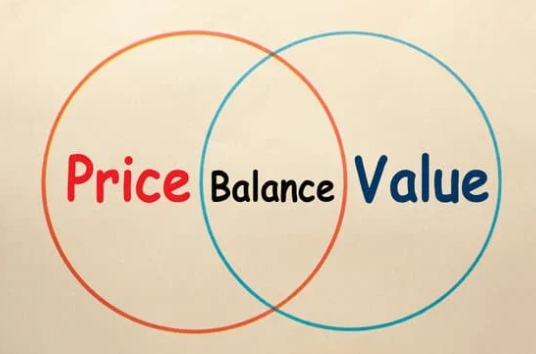
In a strong seller's market, overpricing is forgiving. Buyers compete, prices are rising, and a seller who comes in 5 percent high often still gets an offer within a few weeks. In a shifting or balanced market, that same 5 percent premium can leave a listing sitting for months — accumulating days on market, triggering buyer skepticism, and ultimately producing a lower net than if it had been priced correctly from day one.

Buyers in a balanced market have more options and more time. They're patient, comparison-shopping, and aware of how long listings have been sitting. A listing that's been on the market for 60 or 90 days carries a stigma that price reductions alone rarely overcome. The solution is to price correctly before launch, not to chase the market down after overpricing it.

How to Read the Shifting Grand Strand Market

Pricing in a changing market requires looking at trend data, not just point-in-time snapshots. The key metrics to examine are: active inventory (how many competing listings are available right now), days on market for comparable sold properties, list-to-sale price ratios (are homes selling above, at, or below asking), and pending-to-active ratios (a measure of absorption rate). Understanding where the Myrtle Beach housing market stands right now provides the foundational context for any pricing conversation.

In a shifting market, recent closed sales — not current listings — are your most reliable pricing data. Active listings reflect seller aspirations; closed sales reflect what buyers actually paid. Use only sales from the past 60 to 90 days. Anything older risks reflecting market conditions that no longer exist.

The Comparable Sales Analysis (CMA): What to Look ForCMA and Comps in SC

A properly conducted comparative market analysis compares your property to sold properties that are similar in size (within 10 to 15 percent of square footage), age, condition, location, and features. For condos in Myrtle Beach, floor level, ocean view, building amenities, and HOA fees all require adjustment. For single-family homes, lot size, pool, garage, and school zone matter.

The adjustments appraisers and skilled agents make to account for differences between your property and the comparables are where pricing precision is gained or lost. A 200-square-foot difference between properties, an updated kitchen versus original cabinets, or a direct ocean view versus a partial view can all be worth tens of thousands of dollars. Pricing based on unadjusted averages consistently produces inaccurate results.

Pricing Strategy in a Balanced or Buyer-Leaning Market

In a market where inventory is rising and buyer urgency is declining, pricing slightly below the comparable sales range rather than at the top of it often produces better outcomes. A property priced to attract multiple buyers creates competition, which drives the final sale price up. A property priced at the aspirational ceiling sits — and eventually sells for less than a properly priced listing would have.

The psychological pricing points buyers use in online searches also matter. Most buyers filter by round number ranges — $400,000–$450,000, $450,000–$500,000. A property priced at $459,000 appears in two search ranges. A property priced at $461,000 appears in only one. These nuances matter more in slower markets when every buyer contact counts. Understanding the full Myrtle Beach selling process includes making these kinds of positioning decisions thoughtfully before listing.

When and How to Adjust Price If Needed

If a properly priced listing receives no offers in the first two to three weeks, the market is sending a signal. The appropriate response is a meaningful price adjustment — typically 3 to 5 percent — not a token reduction that fails to move the needle. Reducing from $425,000 to $422,000 doesn't change buyer behavior. Reducing to $409,000 does.

Before reducing price, rule out other causes. If the listing is generating traffic but not offers, the problem may be presentation, photos, or condition rather than price. If it's not generating traffic, the price likely needs to change. Your agent's online analytics — listing views, saves, and inquiry rates — should inform this diagnosis. Browsing currently featured properties gives you a live sense of what active competition looks like in your price range and how your listing compares.

Frequently Asked Questions

How do I know if my Myrtle Beach home is priced correctly?

Correctly priced homes typically generate showing requests within the first week and receive at least one offer within 21 days in normal market conditions. If you're getting showings but no offers, you may be close but slightly high. If you're getting no showings at all, the price is likely more significantly above market. Your agent's feedback and online listing analytics should confirm which situation you're in.

Should I price high to leave room to negotiate?

This strategy backfires more often than it succeeds in a balanced market. Buyers who see a listing priced above comparables don't make low offers — they skip the listing entirely. You never get the negotiation you were hoping for. Pricing at or slightly below market consistently produces more activity and better final outcomes than pricing high with the intention of coming down.

How much does condition affect asking price in Myrtle Beach?

Significantly. Updated kitchens, renovated bathrooms, new flooring, and fresh paint command measurable premiums over homes in original or dated condition. In the Grand Strand market, where buyers are often comparing properties across multiple buildings and neighborhoods, a move-in ready property will consistently price above one requiring cosmetic work — even when the structural components are identical.

How often do Myrtle Beach homes sell at asking price?

List-to-sale price ratios vary with market conditions. In competitive markets, properties frequently close above asking. In balanced or slower markets, most properties close within 2 to 5 percent of asking, with some negotiation on price or seller concessions. Working with an agent who tracks these ratios in your specific submarket gives you the most accurate expectations.

Is it better to price low and create a bidding war in the Grand Strand?

This strategy is most effective in a strong seller's market with low inventory and high buyer urgency. In a balanced or shifting market, pricing below market may simply result in selling below market — particularly if buyer competition is limited. The appropriate pricing strategy depends on current absorption rates, inventory levels, and buyer activity in your specific price range. Your agent should be able to model this for you before you decide.

Abe Safa

Abe Safa

Top Listing Agent | Century 21 Harrelson Group

Abe has lived in Myrtle Beach since 1988. He leads the Abe Safa Sales Team at Century 21 Harrelson Group, specializing in selling homes and condos across the Grand Strand. Known for aggressive marketing, sharp negotiation, calm leadership through closing, and an impeccable track record, putting him in the elite top 1% in the country for listing agents.

📞 (843) 360-2145  /  📧 asafa@c21harrelson.com

Posted in Seller Tips