- Golf course communities offer quieter full-time living, more square footage per dollar, and community amenities — beachfront living delivers ocean access and strong short-term rental income but comes with higher costs and tourist-season congestion.
- Beachfront HOA fees are typically higher than golf community fees, reflecting the cost of ocean-facing exterior maintenance, flood insurance, and resort amenities.
- Short-term rental restrictions vary significantly by community — always verify HOA rental policies before purchasing if income is a priority.
- Most long-term Grand Strand residents choose golf course or inland communities for primary living and enjoy beach access as a recreational amenity rather than a daily constant.
- Working with an agent who knows both categories in detail prevents costly mismatches between your lifestyle expectations and the property you buy.
Two of the most common lifestyle choices for Grand Strand buyers are golf course communities and beachfront properties — and they represent very different living experiences. This comparison is designed to help you evaluate which fits your priorities, budget, and long-term goals.
The Case for Golf Course Communities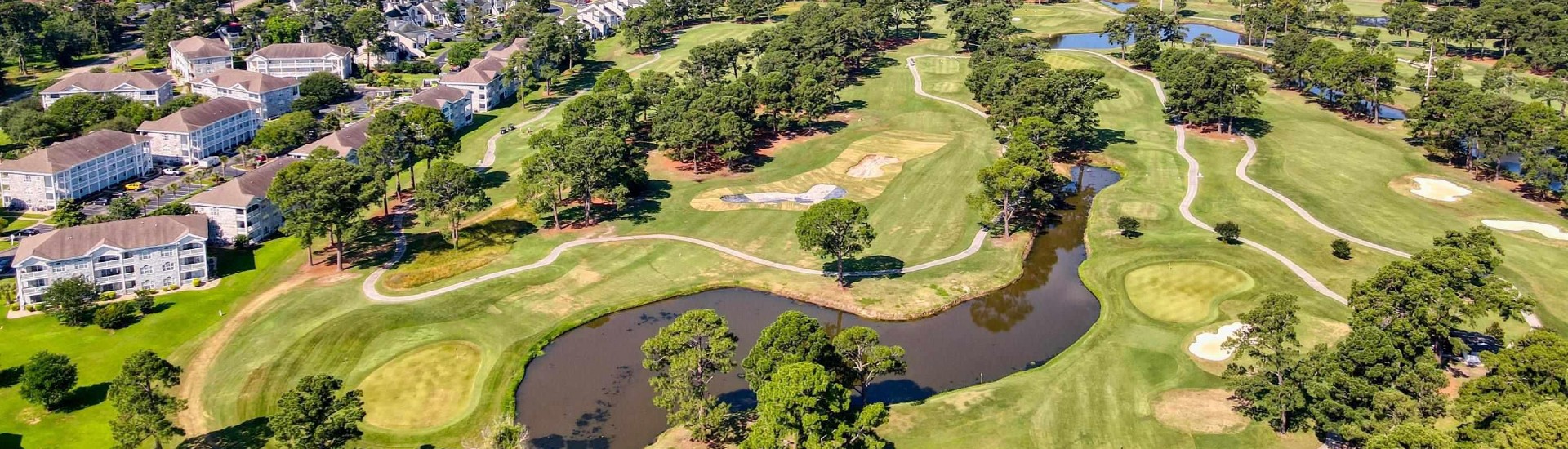
The Grand Strand is one of the premier golf destinations in the country, with more than 100 courses within driving distance. Communities like Barefoot Resort, Grande Dunes, Pawleys Plantation, Legends Golf Resort, and Heritage Plantation were built around this identity — offering residents not just proximity to great golf, but a quality of life that most find more sustainable for full-time living than the oceanfront alternative.
Golf course homes and condos typically offer more square footage per dollar than comparable beachfront properties. HOA amenities often include pools, clubhouses, fitness centers, and landscaping — all maintained by the community. The environment is quieter, less congested in high season, and more oriented toward permanent residents than tourists. For retirees, remote workers, and families choosing primary residences, golf course communities consistently rank at the top of the preference list.
The Case for Beachfront Living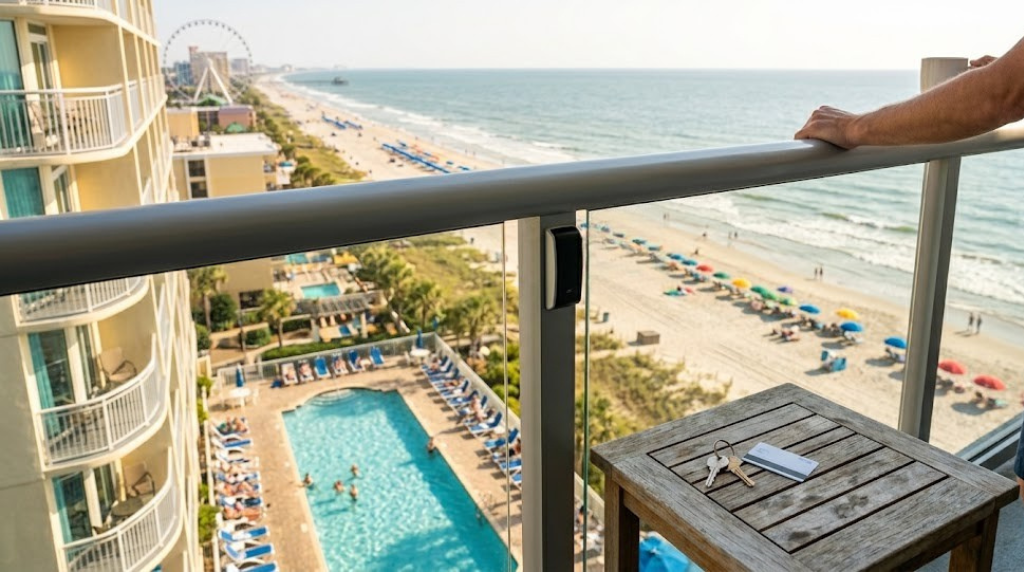
Nothing replaces waking up to direct ocean access. For buyers who have dreamed of that specific lifestyle — coffee on a balcony overlooking the Atlantic, walking to the beach, feeling the salt air — oceanfront properties deliver something golf course communities fundamentally cannot.
Beachfront condos in well-managed buildings are also among the strongest short-term rental performers on the Grand Strand. Tourist demand for oceanfront units is consistent, nightly rates are premium, and occupancy during the May–August season can be high enough to cover carrying costs significantly. For buyers who want to offset their ownership cost with rental income while also using the property personally, a beachfront condo can make strong financial sense. Browse featured Grand Strand beachfront listings to compare current oceanfront inventory across price ranges.
Cost Comparison
For a similar-quality property, beachfront locations command a meaningful premium over golf course communities. An oceanfront condo in a well-maintained building in Myrtle Beach might list at $300,000 to $600,000 depending on size and floor. A comparable-quality residence in a premier golf community like Grande Dunes or Barefoot Resort could be in the same range — but with significantly more square footage and land.
The ongoing cost comparison also favors golf course properties. Ocean-facing exterior maintenance, salt-air corrosion on HVAC and structural elements, and flood insurance requirements push beachfront carrying costs higher. Over a 10-year ownership window, these recurring cost differences can be substantial.
HOA Fees and What They Cover
Both property types carry HOA fees, but the structure differs. Beachfront condo associations typically cover building exterior maintenance, roof, common areas, flood insurance for the building envelope, and resort amenities. Monthly fees in established oceanfront buildings often run $500 to $1,000 or more, depending on the building's age and amenity level.
Golf course community HOAs vary widely. Some cover only exterior maintenance and landscaping. Others include golf privileges, club memberships, or resort-style pool and fitness access. The fee range is broad — from $200/month in more modest communities to $600/month or higher in premier developments like Grande Dunes. Always request the HOA's most recent financial statements and reserve fund balance before committing to any purchase in either category.
Short-Term Rental Income Potential
This is one of the most significant differentiators between the two categories. Beachfront condos, particularly those in buildings that allow short-term rentals, have strong gross rental income potential — oceanfront units with a pool command premium nightly rates during peak season. Many owners offset 50–100% of their annual carrying costs through rentals.
Golf course communities are more restrictive. Many HOAs in premier golf communities prohibit or heavily limit short-term rentals to protect the community's residential character. If rental income is an important component of your ownership model, verify the community's rental policy before proceeding. Your agent should pull the HOA documents specifically for rental restrictions. Review the Myrtle Beach home buying guide for guidance on due diligence steps that protect buyers from unexpected restrictions.
Long-Term Value
Both categories have demonstrated appreciation over time, though the drivers differ. Beachfront properties benefit from the fundamental scarcity of oceanfront land — you can't make more of it. Well-maintained buildings in strong locations have appreciated meaningfully over multi-decade ownership periods. Golf course communities in premier developments have also appreciated, driven by lifestyle demand and the quality of the overall community infrastructure.
In both cases, the individual property's condition, the HOA's financial health, and the specific location within the community or building matter more than the category itself. A beachfront condo in a building with a deferred maintenance problem and an underfunded reserve is a worse long-term investment than a well-run golf community property at the same price point.
Making the Right Choice for You
If you're a full-time resident or retiree prioritizing quality of life, quiet, and space — golf course communities almost always win this comparison. If you're a part-time owner who values rental income and is willing to deal with higher maintenance costs and seasonal congestion — beachfront may be the right trade-off. Many buyers in the Grand Strand end up owning both, over time.
Abe Safa has deep experience in both categories across the full Grand Strand, from oceanfront condos to premier golf community estates. His local knowledge goes beyond listings — he knows which buildings have strong reserve funds, which communities have rental-friendly HOAs, and where value is being created ahead of the market. Review Abe Safa's full agent profile and call (843) 360-2145 to talk through which option fits your goals.
Frequently Asked Questions
What are the most popular golf course communities in Myrtle Beach?
Barefoot Resort in North Myrtle Beach, Grande Dunes along the Intracoastal Waterway, Pawleys Plantation and True Blue Golf Resort in Pawleys Island, and Legends Golf Resort near Conway are among the most recognized golf course communities on the Grand Strand. Each offers a distinct character — Barefoot Resort is more resort-oriented, while Pawleys Plantation has an older, more exclusive feel.
Is beachfront property a better investment than golf course property in Myrtle Beach?
Both can be strong investments depending on the property and your goals. Beachfront condos in well-managed buildings have historically shown strong short-term rental income driven by consistent tourist demand. Golf course properties in established communities like Grande Dunes or Barefoot Resort tend to hold value well and attract longer-stay or primary residence buyers. Neither category universally outperforms the other — the specific unit, building management, and HOA financial health matter more than the category.
Are HOA fees higher in beachfront or golf course communities?
Beachfront properties generally carry higher HOA fees, reflecting the cost of maintaining ocean-facing exteriors, salt-air corrosion management, flood insurance, and resort-style amenities. Golf course communities have their own HOA fees that often cover course maintenance, clubhouse amenities, and landscaping. In both categories, HOA fees can vary significantly — always request the full HOA fee breakdown and review the association's reserve fund before purchasing.
Can I rent out a property in a golf course community on Airbnb or VRBO?
It depends on the community's HOA rules. Many golf course communities restrict or prohibit short-term rentals, while others allow them. This is a critical due diligence item — your agent should pull the HOA documents and confirm rental policies before you make an offer if rental income is a priority. Beachfront communities are generally more permissive of short-term rentals, though some condo associations have added restrictions in recent years.
Which is better for full-time living in Myrtle Beach — golf community or beachfront?
Most full-time residents who have lived on the Grand Strand for extended periods gravitate toward golf course communities or inland neighborhoods for their primary residence, using beach access as a recreational amenity rather than a daily constant. Beachfront living comes with noise, traffic, tourist congestion in high season, and higher maintenance costs. Golf course communities offer a quieter environment, more space, and stronger community infrastructure for full-time living. That said, some residents find the oceanfront lifestyle worth every trade-off.