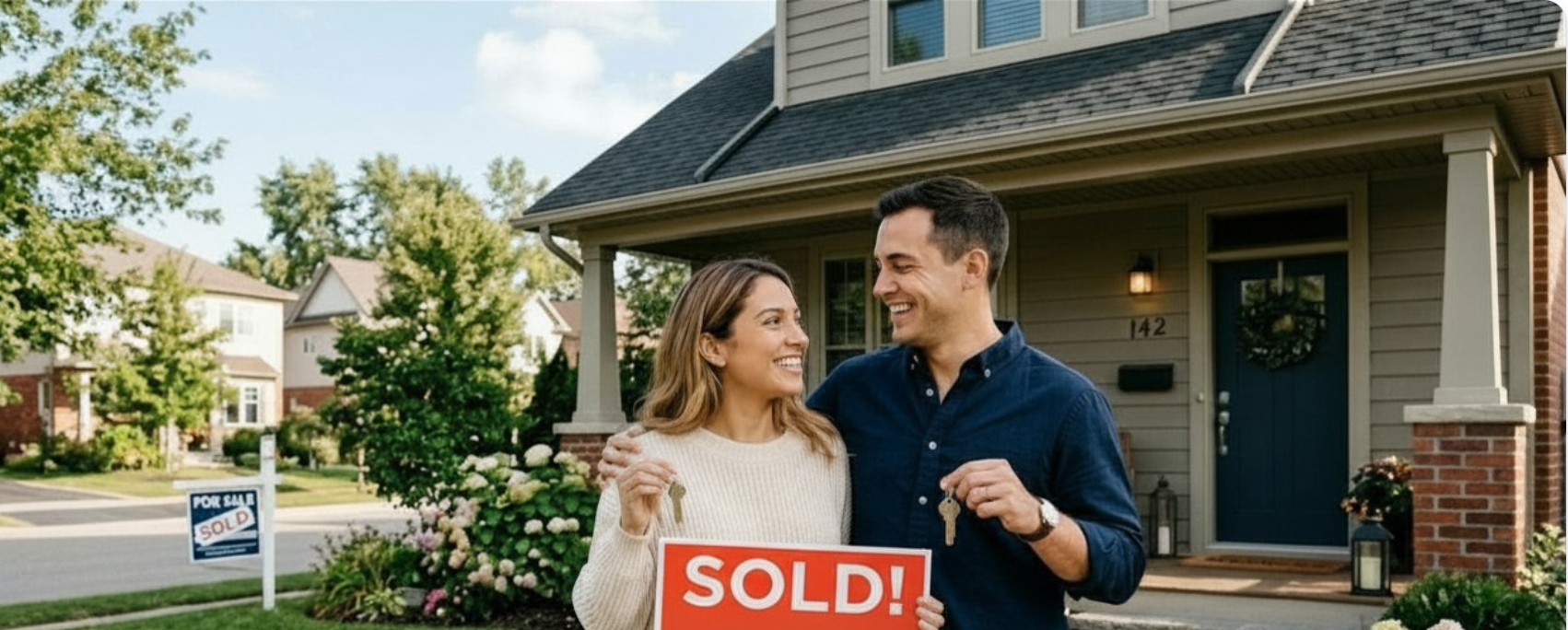
- Get pre-approved before you start touring homes — it clarifies your budget, strengthens your offer, and prevents the heartbreak of falling in love with a home you can't finance.
- FHA loans allow as little as 3.5% down with a 580+ credit score; South Carolina Housing programs may offer additional down payment assistance for qualifying buyers.
- The Grand Strand has unique buyer considerations that don't apply in most markets: flood zones, HOA rental restrictions, condo association financial health, and seasonal pricing patterns.
- Closing costs for buyers in South Carolina typically run 2–5% of the purchase price — these should be budgeted separately from the down payment.
- Most Myrtle Beach transactions close in 30–45 days from accepted offer; having your documentation ready accelerates the lender process significantly.
Buying your first home in Myrtle Beach is one of the most exciting — and most consequential — financial decisions you'll make. Done right, it builds equity, establishes roots, and delivers a quality of life that renting simply can't match. Here is a step-by-step guide to doing it right in the Grand Strand market.
Step 1: Get Pre-Approved Before You Start Shopping
Pre-approval is not a formality — it's the foundation of the entire process. Your lender reviews your income, credit, assets, and debt to determine how much they will lend you and at what interest rate. The resulting pre-approval letter tells sellers you're a serious, qualified buyer, and it tells you the realistic price range to search within.
The distinction between pre-qualification (a quick estimate based on unverified information) and pre-approval (a full underwrite of your financial profile) is significant. In the Myrtle Beach market, sellers are much more receptive to offers accompanied by a pre-approval letter. Explore the Myrtle Beach home buying resources page to understand what lenders look for and how to prepare your documents.
Step 2: Know What You Can Actually Afford
Your pre-approval amount is the ceiling — not the target. Most financial planners recommend keeping total housing costs (mortgage, taxes, insurance, and HOA fees) at or below 28–30% of your gross monthly income. In the Grand Strand, the HOA and insurance components of this calculation can be more significant than buyers coming from inland markets expect.
Run a full monthly cost scenario — not just the mortgage payment. Add estimated property taxes (use 4% of purchase price for primary residence assessment in SC), homeowner's insurance, potential flood insurance, and HOA fees to get a complete picture of what you're committing to monthly before you fall in love with a specific home.
Step 3: Choose the Right Agent
In most markets, buyer's agent services are provided at no direct cost to the buyer (the commission is built into the transaction). But the agent you choose determines how well you navigate the search, offer, inspection, and closing process. A first-time buyer working with an inexperienced agent is one of the most common sources of avoidable mistakes in real estate.
In the Grand Strand specifically, you want an agent who knows the difference between a well-run condo association and one with chronic deferred maintenance, who can read a flood elevation certificate, and who has negotiated enough inspection objections to know what's worth pushing back on.
Step 4: Understand the Grand Strand's Unique Buyer Considerations
Flood zones. The Grand Strand sits on the Atlantic coast. FEMA flood zone designations affect your insurance requirements, insurance cost, and long-term risk profile. Always pull the flood zone designation for any property you're seriously considering. High-risk zones (AE, VE) require flood insurance in addition to homeowner's insurance. Your agent should provide this information proactively.
HOA health. Condo associations in particular have widely varying financial health. Request the most recent budget, reserve fund study, and meeting minutes for any condo you're considering. An association with inadequate reserves is an association heading toward special assessments — unexpected charges levied against all owners to cover major repairs the reserve fund can't pay for.
Rental restrictions. If you're buying with any intention of renting the property — even occasionally — verify the HOA's rental policy before making an offer. Some communities prohibit rentals entirely; others limit minimum rental periods or require prior approval. Browse featured Grand Strand listings to compare properties across communities with different HOA structures.
Step 5: Make Your Offer Strategically
Once you've found the right home, your agent will run a comparative market analysis to establish what the property is worth in the current market. Your offer price should reflect both the market data and strategic considerations: how long the property has been listed, whether there are competing offers, and what contingencies you're including.
Standard contingencies include a home inspection contingency (your right to negotiate or withdraw based on inspection findings) and a financing contingency (your right to withdraw if you can't secure the loan). Waiving either is risky for a first-time buyer unless you have strong reasons and expert guidance.
Step 6: Navigate the Inspection and Appraisal
After the offer is accepted, two critical evaluations happen. The home inspection — performed by a licensed inspector you hire — assesses the property's condition and identifies issues. The appraisal — ordered by your lender — confirms the property is worth what you're paying for it.
The inspection period is typically 10–15 days in South Carolina. Be present for the inspection if possible. Review the report carefully with your agent and decide which findings to request repairs or credits for, and which to accept. Your agent's experience negotiating inspection objections protects your interests here. View recently closed properties to understand typical inspection outcomes and closing prices in your target price range.
Step 7: Close with Confidence
 The closing process in South Carolina is handled by a licensed attorney (attorney-only closing state). You'll review and sign a substantial set of documents, including the deed, promissory note, and closing disclosure. The closing disclosure — provided at least three days before closing — itemizes all costs. Review it carefully against your Loan Estimate and ask your agent or attorney to explain anything that changed.
Bring certified funds (cashier's check or wire transfer) for the down payment and closing costs. Bring your government-issued ID. Do a final walk-through within 24 hours of closing to confirm the property's condition matches the contract terms.
First-Time Buyer Programs in South Carolina
South Carolina Housing offers several programs specifically designed for first-time buyers. The SC Homebuyer Program provides below-market mortgage rates for eligible first-time buyers and qualifying repeat buyers. The Palmetto Heroes program offers enhanced terms for teachers, healthcare workers, first responders, and law enforcement. Down payment assistance programs may provide a second loan or grant to cover part of your down payment or closing costs, reducing the cash you need to bring to closing. Income limits and purchase price caps apply; your lender can help determine which programs you qualify for.
Frequently Asked Questions
What credit score do I need to buy a home in Myrtle Beach?
Most conventional loan programs require a minimum credit score of 620, though better rates become available at 720 and above. FHA loans — popular with first-time buyers — require a minimum score of 580 with a 3.5% down payment. South Carolina Housing offers programs for first-time buyers that can assist with down payment and closing costs; eligibility requirements vary by program and income level.
How much do I need for a down payment in Myrtle Beach?
The minimum down payment depends on your loan type. FHA loans require 3.5% down with a 580 or higher credit score. Conventional loans can require as little as 3% down for first-time buyers, though 5–20% is more common. VA loans and USDA loans for eligible buyers in qualifying areas can require zero down payment. Down payment assistance programs through South Carolina Housing may be available depending on your income and the purchase price.
Are there first-time homebuyer programs in South Carolina?
Yes. South Carolina Housing offers programs including the SC Homebuyer Program, which provides low-interest mortgage financing for first-time buyers and qualifying repeat buyers. The Palmetto Heroes program provides enhanced terms for teachers, law enforcement, firefighters, and healthcare workers. Down payment assistance programs may cover a portion of your required down payment or closing costs as a forgivable or deferred loan. Income and purchase price limits apply.
What closing costs should I expect when buying in Myrtle Beach?
Buyers in South Carolina typically pay closing costs of 2–5% of the purchase price. These include lender fees (origination, appraisal, credit report), title insurance and settlement fees, prepaid interest, and initial escrow deposits for property taxes and homeowner's insurance. Your lender will provide a Loan Estimate within three business days of your application that itemizes these costs.
How long does it take to buy a home in Myrtle Beach?
From accepted offer to closing, most transactions in the Myrtle Beach market take 30 to 45 days, depending on the loan type and lender processing time. VA and FHA loans can take slightly longer than conventional loans. The search process itself varies widely — some buyers find the right home in days, others take several months. Getting pre-approved before you start searching shortens the overall timeline significantly.