
Updated: September 2026
HOA fees are the number one question almost every Myrtle Beach condo buyer asks, and for good reason: they are a real monthly cost that varies enormously from building to building. This guide explains exactly what condo HOA fees cover on the Grand Strand, what counts as normal, why oceanfront buildings cost more, and the red flags to watch before you buy, from a team that has closed over 1,564 transactions in 11 years.
The short version:
- Myrtle Beach condo HOA fees typically run from about $300 to $900+ per month, depending heavily on the building.
- Oceanfront and amenity-heavy buildings sit at the higher end because of insurance, pools, and elevators.
- Fees usually cover master insurance, building maintenance, amenities, and often some utilities, but coverage varies by building.
- A low fee is not automatically good, and a high fee is not automatically bad. What matters is what it covers and whether the reserves are healthy.
- Always review the budget and reserve study before you buy, not just the monthly number.
What Do Myrtle Beach Condo HOA Fees Actually Cover?
In most Grand Strand condo buildings, the monthly HOA fee covers the master insurance policy on the building structure, exterior and common-area maintenance, landscaping, trash, pest control, and the amenities like pools, fitness rooms, and elevators. Many oceanfront and resort-style buildings also bundle in some or all utilities, such as water, sewer, cable, and internet, which is one reason their fees look higher at first glance. What the fee almost never covers is the interior of your individual unit or your personal contents, which is why buyers still carry an individual condo insurance policy known as an HO-6. The key point is that no two buildings define the fee identically, so you always confirm what is and is not included before you compare one building to another. For the bigger picture on buying smart, see the full Myrtle Beach condo buyer's guide.
How Much Are Condo HOA Fees in Myrtle Beach?
As a general range, Myrtle Beach condo HOA fees run from roughly $300 per month for a smaller, amenity-light building to $900 or more per month for a large oceanfront resort-style building. Mid-range buildings often land somewhere in the $400 to $650 window. The single biggest driver of where a building falls is what the fee includes and how amenity-heavy the property is. A building with a lazy river, multiple pools, a fitness center, covered parking, and bundled utilities will always cost more to run than a modest three-story building with a single pool. So a $750 fee that includes all utilities and resort amenities can actually be a better value than a $450 fee that includes almost nothing.
Why Are Oceanfront Condo Fees Higher?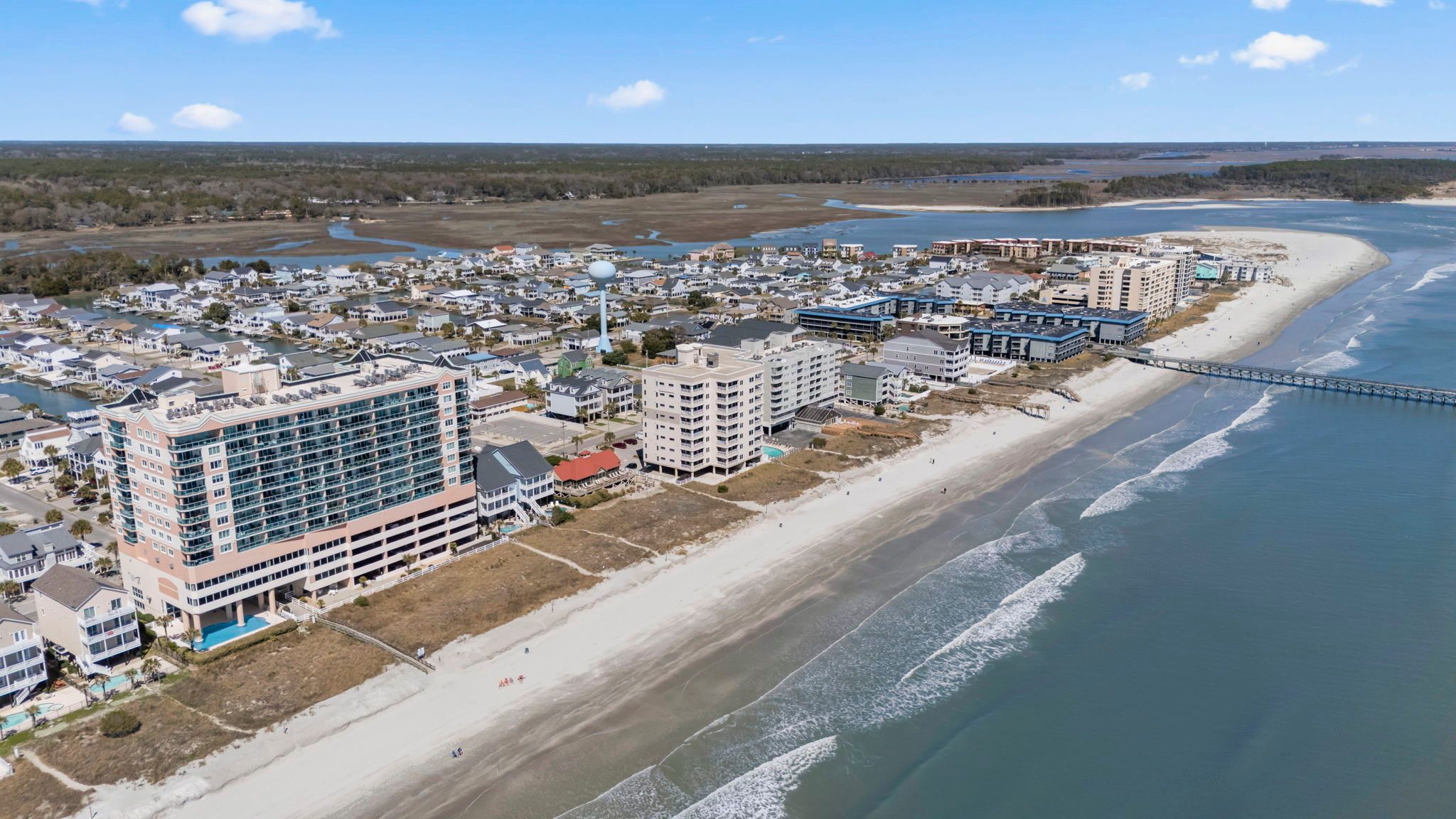
Oceanfront buildings carry higher HOA fees for three main reasons. First, insurance: coastal buildings face higher master insurance and windstorm costs, and that has risen sharply in recent years across the whole Southeast. Second, amenities: oceanfront resort buildings tend to have the pools, lazy rivers, elevators, and common spaces that cost real money to maintain. Third, wear and exposure: salt air and heavy use age a building faster, so oceanfront properties spend more on upkeep and reserves. None of this makes oceanfront a bad buy. It simply means the fee reflects the true cost of owning on the beach, and a well-run oceanfront building that keeps its reserves funded is protecting your investment, not wasting your money.
Is a High HOA Fee a Bad Thing?
Not necessarily, and this is where a lot of buyers get it wrong. A high fee that covers utilities, strong amenities, and healthy reserves can be a genuine value and a sign of a well-managed building. A suspiciously low fee can actually be a warning sign that the building is underfunding its reserves, which often leads to special assessments down the road when major repairs come due. The smart way to evaluate a fee is not to ask whether it is high or low in isolation, but to ask what it covers, how the building's reserve fund looks, and whether fees have been stable or rising steeply. A building that has kept fees reasonable and reserves funded is usually the safer buy, even if its monthly number is not the lowest on the list.
What Red Flags Should Condo Buyers Watch For?
Before buying any Myrtle Beach condo, look past the monthly fee and examine the building's financial health. The main red flags are a thin or depleted reserve fund, a history of frequent special assessments, fees that have jumped sharply year over year, pending litigation, or a high percentage of units used as short-term rentals in a building not set up for it. Any of these can signal future costs or financing difficulty. The good news is that all of it is knowable before you buy: the HOA budget, reserve study, and meeting minutes tell the story. An experienced condo agent knows how to read these documents and spot the warning signs, which is one of the most valuable things a buyer's agent does on the Grand Strand.
How Do You Reach Abe?
Call or text (843) 360-2145, email asafa@c21harrelson.com, or visit abesafa.com. If you are thinking about buying a Grand Strand condo and want help reading a building's fees and financials before you commit, reach out for a straight, no-pressure conversation.
Frequently Asked Questions
How much are condo HOA fees in Myrtle Beach?
Myrtle Beach condo HOA fees typically range from about $300 per month for smaller, amenity-light buildings to $900 or more per month for large oceanfront resort-style buildings, with many mid-range buildings falling between $400 and $650. The biggest factor is what the fee includes and how amenity-heavy the building is. A higher fee that bundles all utilities and resort amenities can be a better value than a low fee that covers very little.
What do Myrtle Beach condo HOA fees cover?
Most Grand Strand condo HOA fees cover the master insurance policy on the building, exterior and common-area maintenance, landscaping, trash, pest control, and amenities like pools, fitness rooms, and elevators. Many oceanfront buildings also include some or all utilities such as water, sewer, cable, and internet. The fee does not cover your unit's interior or contents, so buyers still carry an individual HO-6 condo insurance policy.
Why are oceanfront condo HOA fees higher?
Oceanfront condo fees are higher mainly because of rising coastal insurance and windstorm costs, the expense of maintaining resort amenities like pools and elevators, and the faster wear that salt air and heavy use cause. A well-run oceanfront building that keeps its reserves funded is protecting your investment, so a higher fee is not automatically a negative.
Is a low HOA fee always better?
No. A suspiciously low HOA fee can be a warning sign that the building is underfunding its reserves, which often leads to special assessments when major repairs come due. A higher fee that covers utilities, amenities, and healthy reserves can be the safer, better value. Always evaluate what the fee covers and the building's reserve health rather than just the monthly number.
What should I check before buying a Myrtle Beach condo?
Before buying, review the building's HOA budget, reserve study, and recent meeting minutes, and watch for red flags like thin reserves, frequent special assessments, sharply rising fees, pending litigation, or a heavy short-term-rental mix in a building not designed for it. These documents reveal the building's true financial health. An experienced condo agent can read them and spot warning signs before you commit.
Thinking about buying a Grand Strand condo? Call or text (843) 360-2145 for a no-pressure conversation and help reading any building's fees and financials before you make an offer, from the team that closes more than a hundred Grand Strand sales a year.