- FEMA flood zones divide properties into risk categories — Zone X (minimal risk), Zone AE (moderate-to-high risk), and Zone VE (coastal high hazard) — with dramatically different insurance requirements and costs at each level.
- Flood insurance is mandatory for any federally backed mortgage (FHA, VA, conventional) on properties in AE or VE zones — this is not optional and can add $2,000–$6,000 or more annually to carrying costs.
- A flood elevation certificate documents how high your structure sits relative to the Base Flood Elevation — elevations above the BFE can dramatically reduce insurance premiums.
- The Grand Strand includes all three flood zone types — some properties within blocks of each other can have dramatically different insurance costs based on elevation.
- Always request the flood zone designation and get an insurance quote for the specific property before making an offer — this information should be part of your initial due diligence, not a closing-day surprise.
Every coastal property purchase in the Grand Strand requires a clear understanding of flood zones — before the offer, not after. Flood zone designation affects your mandatory insurance costs, your lender's requirements, the long-term risk profile of the property, and in some cases the feasibility of the purchase itself. Here's what you need to know.
What Are FEMA Flood Zones?
The Federal Emergency Management Agency (FEMA) maps flood risk across the country through its National Flood Insurance Program (NFIP). These Flood Insurance Rate Maps (FIRMs) designate every parcel of land into a flood zone category based on statistical modeling of flood frequency and severity. The maps are the basis for both flood insurance requirements and premium calculations.
Flood zones are not static — FEMA periodically updates maps as new elevation data, hydrological studies, and construction changes alter the risk landscape. A property's current flood zone is what matters at the time of purchase, but you should also be aware that maps can be revised, potentially changing insurance requirements in the future.
Flood Zones on the Grand Strand
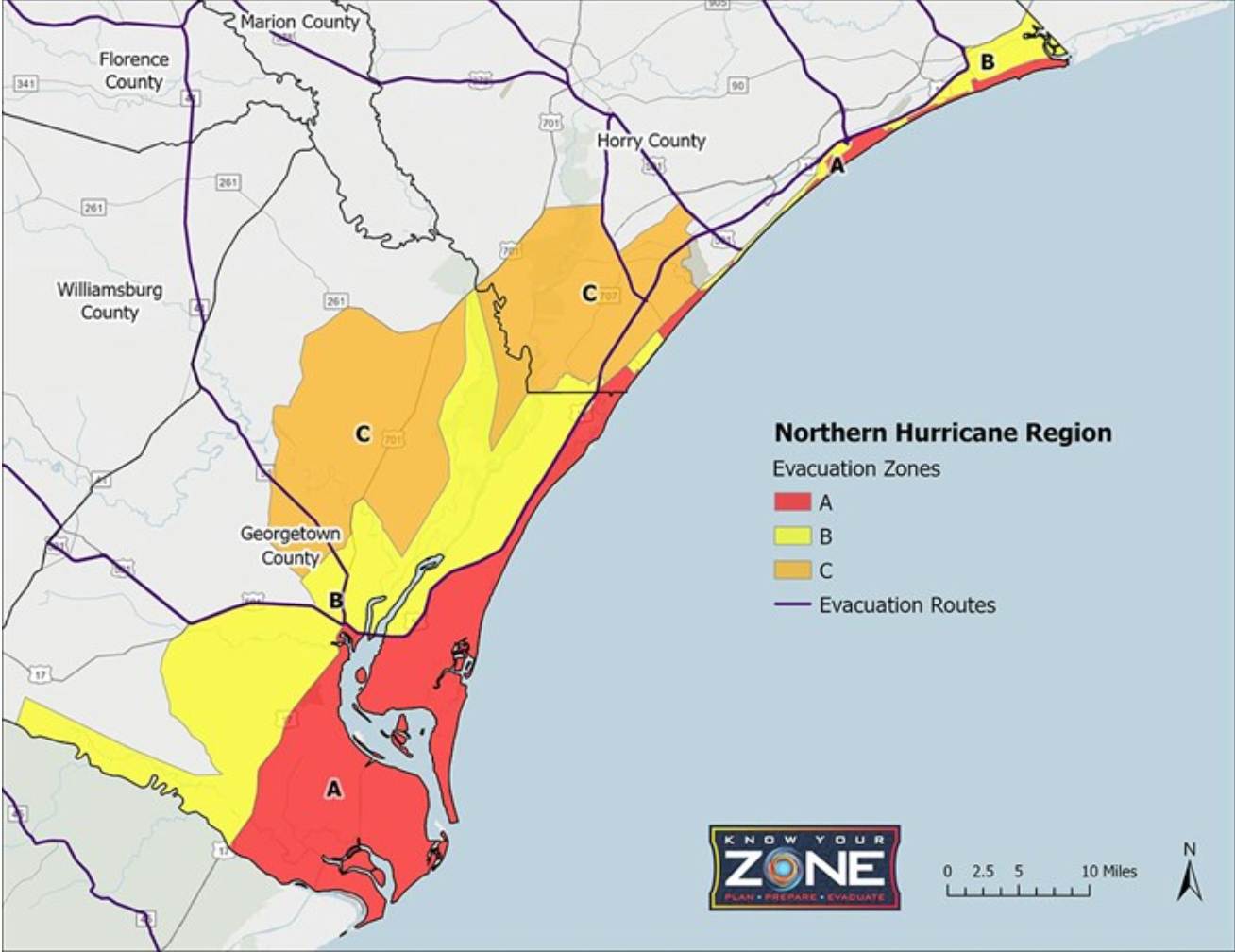
The Grand Strand spans from the Virginia border to Georgetown County — a 60-mile coastline with inland waterways, marshes, rivers, and tidal channels that create a complex patchwork of flood zones. Understanding which zone applies to a specific property requires looking at the address on the FEMA flood map, not generalizing from the neighborhood or street.
Properties two blocks from the ocean may be in Zone X with no mandatory flood insurance. Properties a mile inland near a tidal creek may be in Zone AE with significant insurance requirements. The variation within a single community can be dramatic — this is why reviewing the FEMA map for the specific address is essential for any Grand Strand purchase.
Zone X — Minimal Risk
Zone X (and the older designation "Zone C" on some older maps) indicates minimal flood hazard — areas outside the 500-year floodplain. Flood insurance is not required by lenders for Zone X properties. However, "minimal risk" is not "zero risk" — even Zone X properties can experience flooding during extraordinary storms. Flood insurance can still be purchased for Zone X properties through the NFIP at lower preferred risk rates, and some buyers choose to carry it anyway for peace of mind.
Zone AE — Special Flood Hazard Area
Zone AE (and the older designation "Zone B" on some older maps) designates areas within the 100-year floodplain — meaning there is a 1% chance of flooding in any given year. This sounds low, but over a 30-year mortgage, the cumulative probability of experiencing at least one flood event is approximately 26%. Flood insurance is mandatory for federally backed mortgages on AE-zone properties.
Insurance premiums for Zone AE properties vary significantly based on the structure's elevation relative to the Base Flood Elevation (BFE) — the benchmark elevation for the 100-year flood event in that area. A structure with a first floor elevated well above the BFE can pay dramatically lower premiums than one at or below it. See the recently closed Grand Strand properties to understand how AE-zone designation has factored into recent transactions in your price range.
Zone VE — Coastal High Hazard Area
Zone VE (and the older designation "Zone A" on some older maps) is the highest-risk designation — coastal areas where wave action is a risk in addition to flooding. Most oceanfront properties in Myrtle Beach are in VE zones. Insurance premiums are the highest in this category, and building codes are the most stringent — new construction and significant renovations in VE zones must meet elevated building requirements to withstand wave action.
Owning a VE-zone property does not mean you'll experience flooding, but it means you're paying for insurance that reflects the highest statistical coastal risk category. For primary residences, these premiums are a real carrying cost. For investment properties with strong short-term rental income, the premium is often an acceptable trade-off. The key is knowing the number upfront.
Flood Elevation Certificates
A flood elevation certificate (FEC) is a document prepared by a licensed land surveyor that records the exact elevation of the lowest floor of the structure relative to the Base Flood Elevation. It is the most powerful tool for reducing flood insurance premiums on AE and VE zone properties.
If the structure's lowest floor is above the BFE, the insurance premium can be significantly lower than the default rate. If the lowest floor is at or below BFE, premiums will be higher. The certificate costs $150 to $500 to obtain — often a worthwhile investment if it reveals favorable elevation data that reduces ongoing premiums by hundreds of dollars annually. Ask your agent whether an existing flood elevation certificate is available for any property you're considering. Review the Myrtle Beach real estate market report for context on how insurance costs are affecting buyer decisions in coastal areas.
How to Evaluate Flood Risk Before Making an Offer
The minimum you should know before submitting an offer on any Grand Strand property:
1. The flood zone designation. Look up the specific address on FEMA's Flood Map Service Center (msc.fema.gov). Your agent should do this proactively — if they don't, ask.
2. An insurance quote. Contact a licensed insurance agent who handles coastal properties and get a quote for both homeowner's insurance and flood insurance (if applicable) for the specific address. This quote — not a general estimate — is the number that should go into your monthly cost calculation.
3. The elevation certificate, if available. For AE or VE zone properties, ask whether an existing FEC is available. If not, determine whether commissioning one makes sense before closing.
4. The NFIP vs. private insurance market. Private flood insurance has become an increasingly competitive alternative to NFIP for coastal properties. Ask your insurance agent to quote both — private policies can sometimes offer lower premiums or better coverage terms. If you're selling a coastal property, having documentation of current flood insurance transferability can be a selling advantage.
Frequently Asked Questions
What flood zones are common in Myrtle Beach?
Myrtle Beach and the Grand Strand include properties in multiple FEMA flood zones. Zone X (minimal risk) covers most inland areas and does not require mandatory flood insurance. Zone AE covers lower-elevation areas near rivers, marshes, and some coastal areas, requiring flood insurance for properties with federally backed mortgages. Zone VE is the coastal high-hazard zone directly along the ocean, with the highest insurance requirements and strictest building codes.
Is flood insurance required in Myrtle Beach?
Flood insurance is required by federally backed mortgage lenders for any property located in a Special Flood Hazard Area — FEMA zones AE, VE, or other designated high-risk zones. Flood insurance is not required for properties in Zone X (minimal risk), though it can still be purchased and may be advisable. Properties purchased with cash have no lender-mandated flood insurance requirement, though forgoing coverage in a high-risk zone is a significant financial risk.
How much does a flood elevation certificate cost in Myrtle Beach?
A flood elevation certificate is typically prepared by a licensed surveyor and costs between $150 and $500 in the Myrtle Beach area, depending on the property and surveyor. The certificate documents the lowest floor elevation of the structure relative to the Base Flood Elevation established by FEMA. Elevations above the BFE can significantly reduce flood insurance premiums, making the certificate cost worthwhile for most properties in AE or VE zones.
Can you negotiate on a property because of its flood zone?
Yes. High flood insurance costs are a legitimate factor in pricing negotiations, particularly for properties in AE or VE zones where insurance premiums may be $3,000 to $6,000 or more annually. A buyer who gets an accurate insurance quote before making an offer can factor the carrying cost differential into their offer price. Your agent can help you understand how flood zone designation affects comparable sales and the appropriate pricing adjustment.
What is the difference between Zone AE and Zone VE?
Both are Special Flood Hazard Areas with mandatory flood insurance requirements for federally backed mortgages, but they have different risk profiles. Zone AE covers areas subject to flooding by the base flood, typically near rivers, creeks, marshes, and some coastal areas. Zone VE is the coastal high-hazard area where wave action is an additional risk factor beyond flooding alone — essentially ocean-facing properties. Zone VE carries higher insurance premiums and stricter building code requirements because of the combined flooding and wave-action risk.