If you're shopping for property in Myrtle Beach or anywhere along the South Carolina coast, you've probably come across the term "condotel." It sounds like a condo, it looks like a condo — but it comes with a completely different set of rules, restrictions, and financing requirements. Understanding the difference before you make an offer can save you from costly surprises at closing.
What Is a Condotel?
A condotel — short for "condo hotel" — is a unit inside a hotel-style building that is individually owned but operates within a rental management program. These buildings typically have front desk service, daily housekeeping, amenities like pools and fitness centers, and short-term rental programs that allow owners to place their unit into a hotel rental pool when they're not using it.
In Myrtle Beach, many oceanfront high-rises operate as condotels. The building looks like a resort — because it is one. Owners use their units for personal vacations and rent them out the rest of the year, generating income to help offset ownership costs.
 What Is a Traditional Condo?
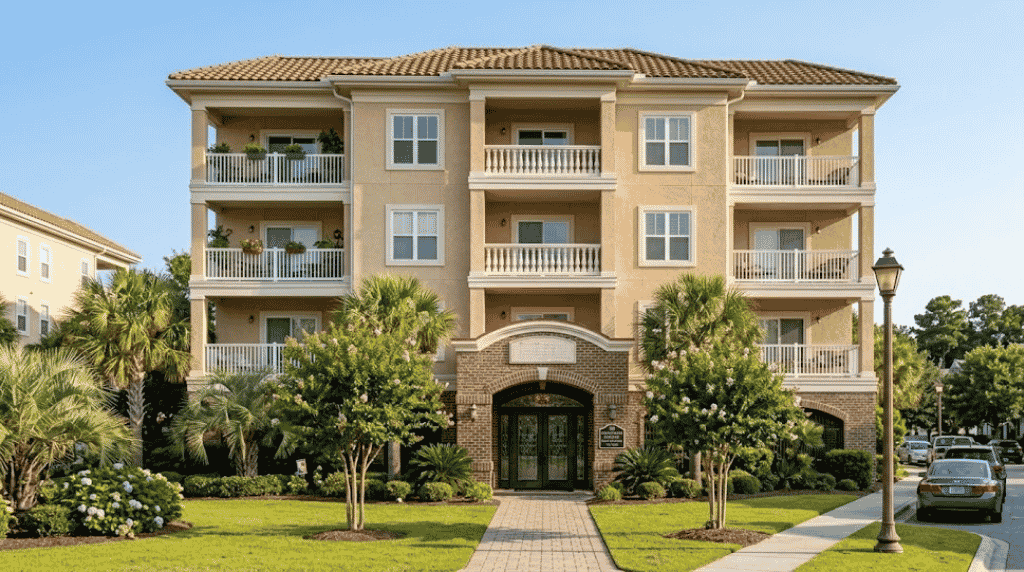
A traditional condo is a privately owned unit in a residential condominium building. You own your unit, share common areas with other owners, and pay HOA fees that cover building maintenance, exterior insurance, and shared amenities. Some traditional condos allow short-term rentals; many do not. The key distinction is that they are governed as residential communities, not as hotels.
Key Differences That Affect Your Purchase
Financing: This is the biggest practical difference. Traditional condos can typically be financed with conventional mortgage loans. Condotels are classified differently by lenders — most conventional lenders won't finance them. You'll typically need a non-warrantable condo loan, a portfolio loan from a local bank, or cash. Down payment requirements are often higher (20–30%), and interest rates may be elevated compared to standard residential financing.
HOA Fees and Operating Costs: Condotel fees tend to run significantly higher than traditional condo HOA fees because they cover hotel-level services and operations. Monthly fees of $800–$1,500 are common in Myrtle Beach condotel buildings. Traditional condo HOA fees vary but are typically more moderate.
Rental Income Potential: Condotels offer access to an established hotel rental program, making it relatively easy to generate rental income from day one. Traditional condos can also produce rental income if the association permits short-term rentals, but you'll need to market and manage the rental yourself or hire a property manager.
Personal Use Restrictions: Many condotel rental programs limit how many nights per year owners can occupy their own unit. Read the management agreement carefully before you buy. Traditional condos have no such restrictions — it's your home to use as you choose, subject only to HOA rules.
Insurance: Condotel buildings carry commercial insurance rather than standard residential master policies. Owners may need a gap policy or commercial unit owner policy. Have your insurance agent review the building's master policy before closing.
Which Type Is Right for You?
If you're looking for a vacation home you plan to use frequently, a traditional condo often makes more sense. You'll have greater flexibility, easier access to conventional financing, and typically lower carrying costs. Review the buyer's guide to understand what to evaluate before making an offer.
If your primary goal is generating income with occasional personal use, a condotel can be a strong performer — especially in a high-demand beach market like Myrtle Beach. Just go in with clear expectations about financing requirements, higher fees, and use restrictions.
Research the Building Before You Commit
The Grand Strand has dozens of condo and condotel buildings, each with its own rules, rental restrictions, and financial profile. Before buying, review the building's HOA financials, reserve fund status, and any pending special assessments. Explore popular condo types in Myrtle Beach to get a sense of what's available — from residential condos in quiet complexes to full-service oceanfront condotels.
Work With an Agent Who Knows the Difference
Many buyers don't discover they're purchasing a condotel until they're deep in the loan process and their lender declines the file. An experienced local agent will identify the property type upfront, explain the financing requirements, and connect you with a lender suited to the transaction — before you're under contract and on the clock. To discuss your options along the Myrtle Beach condo market, reach out to Abe Safa at (843) 360-2145.
Frequently Asked Questions
What is the difference between a condotel and a traditional condo in South Carolina?
A condotel operates like a hotel with front-desk check-in and nightly rentals managed through a hotel program, while a traditional condo is a privately owned unit where the owner controls how and when it is rented. Condotels typically require specialized financing and come with higher operating costs due to shared hotel amenities.
Can I get a conventional mortgage to buy a condotel in Myrtle Beach?
No — conventional loans from Fannie Mae or Freddie Mac are not available for condotels. Buyers must use portfolio lenders, DSCR loans, or commercial financing products, which often require larger down payments (typically 25–30%) and carry higher interest rates than standard condo loans.
Which type of property generates more rental income — a condotel or a traditional condo?
Condotels can generate strong gross rental revenue due to hotel-program occupancy rates, but their net income is often lower because of higher HOA fees, management splits, and operating expenses. Traditional condos give owners more control over pricing and platform selection, which can lead to better net returns when actively self-managed.
Are there special HOA rules I should know about when buying a condotel in South Carolina?
Yes. Condotel HOA agreements often require owners to participate in the hotel rental program for a minimum number of days per year, restrict personal use windows, and share a larger pool of operating expenses. Reviewing the CC&Rs and rental-program agreement with an attorney before purchase is strongly recommended.
How do I decide whether a condotel or a traditional condo is the right investment for me?
Consider your financing options, tolerance for management involvement, and income goals. If you want hands-off ownership with professional management, a condotel may fit — but verify the net numbers carefully. If you want flexibility, greater control, and access to conventional financing, a traditional condo in a resort-style building is usually the stronger investment choice.