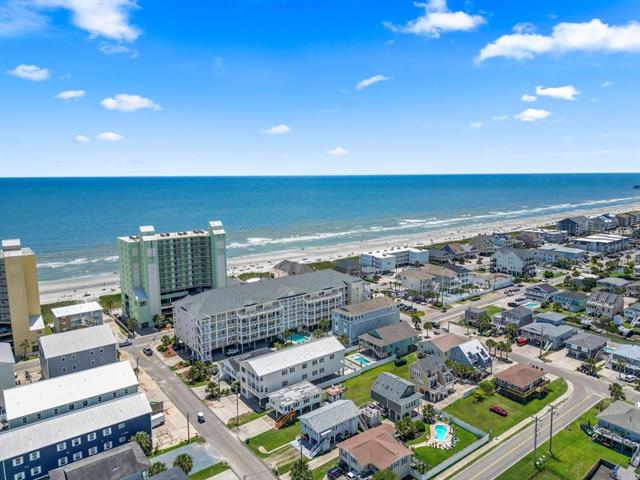
Short answer, as of October 2026: sell your Myrtle Beach rental condo now if it no longer clears its costs after management, HOA fees, insurance and taxes, if the building is heading for a special assessment or may not pass the stricter Fannie Mae and Freddie Mac review that arrives in January 2027, or if the equity would earn more somewhere else. Keep it if the unit cash-flows after every expense, the building's finances are healthy, and you can hold through a buyer's market without stress. The market itself is a buyer's market: the median Grand Strand condo sold for $219,500 in September 2026, down 8.2% from a year earlier, with 308 closings (down 17.4%), 131 days on market and 8.2 months of supply, according to Coastal Carolinas Association of Realtors data in the latest Myrtle Beach market report, and the 30-year mortgage rate hit 7.61% on October 6. This guide walks through the numbers and the signals so you can make the call on your own unit, from a team that has closed over 1,300 transactions in 11 years.
What the Condo Market Is Telling Owners Right Now
The condo side of the Grand Strand has been under pressure all year. The median price has moved in a narrow $219,500 to $228,000 band from April through September 2026 and finished the quarter at the bottom of it. Closed sales fell from 416 in July to 308 in September, pending contracts have been stuck between 340 and 380 a month since June, and supply sits at 8.2 months, well above the six-month line that marks a balanced market. In plain terms, there are more condo sellers than condo buyers, and the buyers who are active at 7.61% are negotiating from strength. None of that means condos are not selling. Three hundred eight of them closed in September, and the ones that closed were the ones priced to the last 90 days of sales in their building. It does mean that a seller who waits for the market to bail out an ambitious price is likely to wait a long time.
Run the Real Numbers: What Your Rental Condo Actually Nets
Most owners know their gross rental income and almost nobody knows their net, which is the only number that matters for this decision. Start with a full year of management statements and subtract everything: the management fee (full-service short-term rental management often takes 20 to 40 percent of gross revenue, so check your own split), the HOA fee (what Myrtle Beach HOA fees cover and why oceanfront buildings run $300 to $900 or more a month), your HO-6 policy and the share of building insurance that flows through the HOA (condo insurance on the coast has climbed sharply), property taxes at South Carolina's 6% assessment ratio for non-owner-occupied property instead of the 4% a primary residence gets, utilities and internet, furnishing replacement and the wear that renters create, and a reserve for special assessments. The full expense list is in the real math on a Myrtle Beach investment condo.
As an illustration only, with round numbers: a unit grossing $30,000 a year that pays 30 percent to management ($9,000), $600 a month in HOA fees ($7,200), $1,800 in insurance, $3,600 in property taxes, $3,000 in utilities and internet, and $2,000 in maintenance and replacements keeps about $3,400 before any mortgage payment. On a unit worth $220,000, that is roughly a 1.5 percent cash return before debt service, and a negative number for most owners with a loan. Plug in your own figures with the investment property ROI calculator and compare the result against what the equity would earn elsewhere. If the honest answer is that the condo is a hobby that pays for itself in some years and costs money in others, that is the answer.
Five Reasons Owners Are Choosing to Sell in Late 2026
- The building's finances are getting harder to finance. The new Fannie Mae and Freddie Mac condo rules retired the Limited Review on August 3, 2026, and the expected reserve funding rises from 10% to 15% of the association's annual budget for applications on or after January 4, 2027. Buildings that fall short become cash-only or portfolio-loan buildings, and a smaller buyer pool means a lower price. If your board has not shown you a reserve study, ask for one before you decide.
- A special assessment is coming. Roofs, balconies, elevators and insurance deductibles do not get cheaper. If the next assessment is visible on the horizon, selling before it lands is usually better than paying it and then selling into the same market.
- Insurance and HOA fees are outrunning rents. Coastal master policies and HO-6 premiums have risen faster than nightly rates, which is why units that cash-flowed a few years ago may not today.
- You are done managing it. Guest issues, platform fees, furnishing turnover and a 131-day sales cycle if you ever need out quickly are real costs even when they do not show on a statement.
- The equity has a better job. Paying off a primary mortgage, funding a move, or putting the money into something that yields more than 1 or 2 percent is a legitimate reason to sell, even in a buyer's market, as long as you price to sell rather than to test.
Five Reasons to Keep It
- It clears its costs after everything, including a reserve for assessments. A unit that nets real cash after management, HOA, insurance, taxes and wear is an asset, not a problem, and selling it in a buyer's market gives that up.
- The building is strong. Healthy reserves, a current reserve study, full insurance and a passing Fannie Mae and Freddie Mac status mean your building's buyer pool stays wide whenever you do sell, so there is no urgency premium for selling now.
- You can hold for years, not months. Owners with a long horizon and no need for the equity can wait out the current supply. The $219,500 median is below the $239,000 the market traded at a year ago, and selling at the low point only makes sense if the numbers force it.
- The booked season ahead is already paid for. A calendar full of deposits is income in hand. If you lean toward selling, you can still list with the bookings in place, as explained in selling a condo with future rental bookings, but there is no rule that says you must list this winter.
- Selling costs and taxes would eat the gain. Between commissions, closing costs, depreciation recapture and capital gains, a sale can net far less than the headline price. Read the full cost of selling a condo in Myrtle Beach and capital gains tax on a Myrtle Beach condo sale, then run the net sheet before you decide.
What the New Fannie Mae and Freddie Mac Rules Mean for a Sale
Financing is the hidden variable in every condo price. When a building passes the agencies' project review, most buyers can use a conventional loan and the pool of possible buyers is wide. When it does not, the only buyers are cash buyers and the few lenders who will write a portfolio loan at a higher rate, and the price adjusts to match. The rule change in January 2027 moves the line for reserve funding from 10% to 15% of the annual budget, so buildings that barely pass today may not pass next year. For a rental condo owner that creates a timing question: if your building is on the edge, listing while it still passes, or at least getting the board's answer before you list, protects your price. If your building passes comfortably, the rule is a selling point and you should say so in the listing.
If You Decide to Sell: How to Sell a Rental Condo Well
Price from the last 90 days of closed sales in your building and the comparable buildings around it, not from the asking prices of units that are sitting. Build the investor package before launch: twelve months of management statements, the booking calendar, the HOA budget and reserve study, the master insurance policy and the building's financing status, because investor buyers decide on that package, not on the photos. Time it with purpose: condo pending contracts peak in April and May, so a listing that is ready in late winter catches the most buyers, and the best time of year to sell a condo covers the seasonal detail. Then market to the right audience, which for a rental condo is investors and second-home buyers who are comparing income numbers across buildings. The step-by-step is in how to sell a condo in Myrtle Beach, and on qualifying listings Abe backs it with an Easy Exit Listing Agreement and a 60-Day Sale Guarantee. Read the full guide to selling an investment or vacation rental condo on abesafa.com for the complete playbook.
How Do You Reach Abe?
If you own a rental condo anywhere on the Grand Strand and want a straight answer on sell or keep, call or text (843) 360-2145 or request a condo valuation. You will get the current value of your unit, the net after selling costs, and an honest read on the building, from the team that closes more than a hundred Grand Strand sales a year.
Frequently Asked Questions
Should I sell my Myrtle Beach rental condo now or keep it?
Sell if the condo no longer clears its costs after management, HOA fees, insurance and taxes, if the building is heading for a special assessment or may not pass the new Fannie Mae and Freddie Mac review that tightens in January 2027, or if you need the equity for something that earns more. Keep it if the unit cash-flows after every expense, the building has healthy reserves and insurance, and you can hold through a buyer's market. As of October 2026 the condo median is $219,500, down 8.2%, with 8.2 months of supply, so the market is not going to make the decision for you; the numbers on your own unit will.
Will Myrtle Beach condo prices recover in 2027?
Nobody can promise that. The 2026 data shows the median condo price in a $219,500 to $228,000 band with 8.2 months of supply, closings down 17.4% and pending sales down 6.5%, which means more sellers than buyers for now. Two things would have to change for prices to firm up: mortgage rates would need to come down from 7.61%, and buildings would need to clear the stricter Fannie Mae and Freddie Mac reviews so financed buyers can get loans. Neither is guaranteed in 2027.
Can I sell my condo while it has future rental bookings?
Yes. Bookings transfer to the new owner in most sales, and investor buyers often see a booked calendar as a plus because it proves the income. Your management agreement spells out how reservations and deposits are handled at closing. The rental history, the booking calendar and the management statements become part of the listing package.
How do the 2027 Fannie Mae and Freddie Mac reserve rules affect selling my condo?
Fannie Mae and Freddie Mac retired the Limited Review process on August 3, 2026 and will raise the expected replacement reserve funding from 10% to 15% of an association's annual budget for applications on or after January 4, 2027. A building that does not pass review becomes a cash-only or portfolio-loan building, which shrinks the buyer pool and the price. If your building's reserves are thin, selling before the rule tightens, or at least knowing your building's status before you list, is worth real money.
What taxes will I owe when I sell a rental condo in South Carolina?
A rental condo is an investment property, so the gain is taxed as a long-term capital gain if you owned it more than a year, and the depreciation you claimed is recaptured at a federal rate of up to 25%. South Carolina taxes the gain as well. A 1031 exchange can defer the tax if you buy another investment property on the required timeline. Get the numbers from a CPA before you list, because the tax bill changes what a sale actually nets.
How do I find out what my rental condo is worth right now?
The Grand Strand median was $219,500 in September 2026, but your building and your unit's floor, view and rental history matter more than the market median. A comparative market analysis built from the last 90 days of closed sales in your building and comparable buildings, plus the rental income the unit documents, gives you the real number. Call or text (843) 360-2145 for one at no obligation.