- The Grand Strand stretches over 60 miles and includes distinct communities — from Myrtle Beach proper to quieter areas like Murrells Inlet, Surfside Beach, and Carolina Forest — each with a different character and price range.
- South Carolina offers favorable tax treatment for primary residents: no property tax on a primary residence above the homestead exemption threshold, no estate tax, and a relatively low income tax burden.
- Out-of-state buyers can complete the full purchase process remotely — virtual tours, digital signatures, and coordinated inspections are standard — with the right local agent guiding each step.
- Flood zone status is one of the most important considerations for any Grand Strand property and must be evaluated before making an offer, as it directly affects insurance costs.
- Working with a local agent who specializes in relocation buyers saves significant time and prevents costly mistakes for buyers who can't always be on the ground in person.
Thousands of people relocate to the Grand Strand every year — retirees escaping northern winters, remote workers drawn by the cost of living, families seeking a different pace of life, and buyers who have been visiting for years and finally decided to make it permanent. If you're planning a move to Myrtle Beach or the surrounding area, this guide covers the most important things to understand before, during, and after the move.
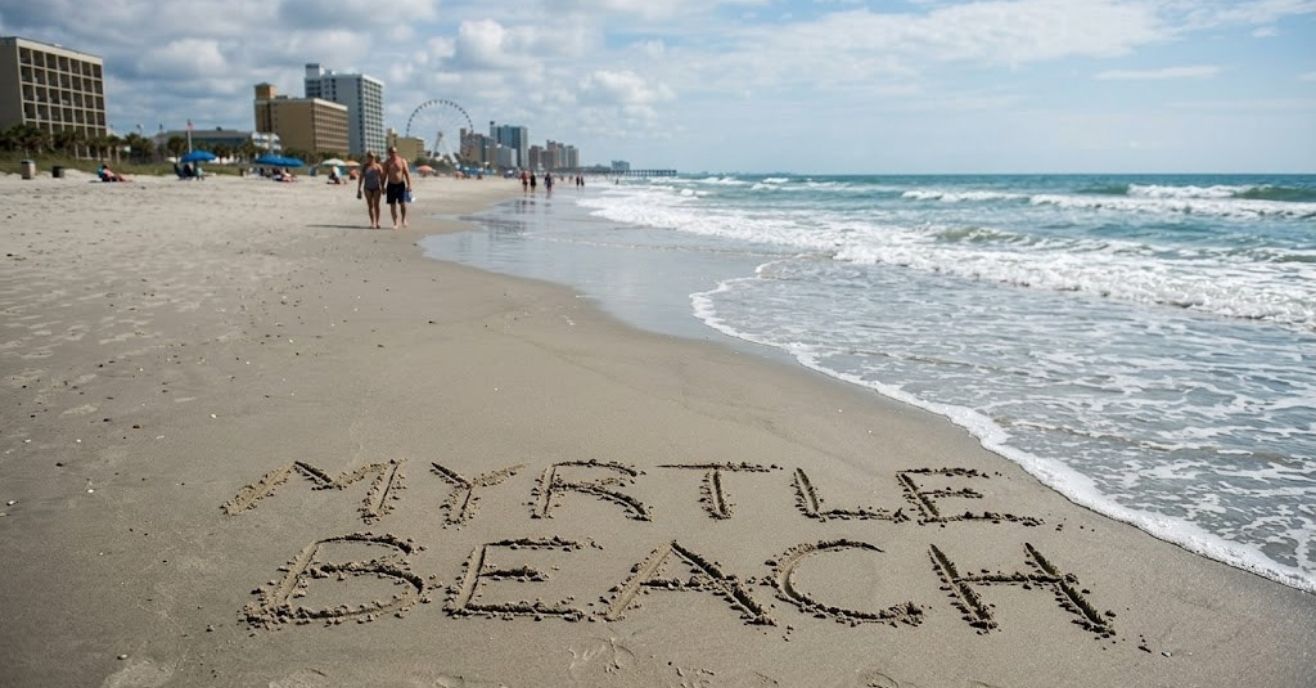
Why People Are Moving to the Grand Strand
The appeal of the Grand Strand is practical as much as scenic. The combination of affordable housing, favorable tax environment, year-round mild climate, and access to the Atlantic makes it one of the fastest-growing coastal markets in the Southeast. South Carolina imposes no estate tax and offers a homestead exemption that reduces property taxes on primary residences. For retirees on fixed incomes or remote workers comparing cost of living across markets, the numbers often favor the Grand Strand significantly over comparable coastal areas in Florida, the Carolinas' Triangle, or the Northeast.
Beyond the numbers: 60 miles of coastline, access to world-class golf, a growing restaurant and arts scene, and a genuine sense of community across the area's smaller towns are factors that keep people once they arrive.
Understanding the Grand Strand's Geography
The Grand Strand is not a single community — it's a region. Myrtle Beach proper is the most urban and commercial area, with the highest concentration of entertainment, dining, and tourism infrastructure. North Myrtle Beach sits above the Intracoastal Waterway and has its own distinct character — quieter in some areas, with strong neighborhoods like Barefoot Resort and Cherry Grove.
South of Myrtle Beach, communities shift toward a more residential feel. Surfside Beach has long been known as "the family beach." Murrells Inlet is prized for its waterfront dining, fishing culture, and established neighborhoods. Pawleys Island and Litchfield Beach are the quietest and most historic reaches of the Grand Strand. Inland communities like Carolina Forest offer newer construction, strong school options, and suburban amenities without the oceanfront price premium. Browse featured Grand Strand listings to compare available properties across these communities side by side.
Cost of Living Overview
 Housing is the area where the Grand Strand delivers the most meaningful cost advantage over northern and mid-Atlantic markets. Median home prices in most Grand Strand communities run well below comparable coastal markets in the Northeast, and there is a wide range of price points — from entry-level condos to oceanfront estates — within a compact geography.
South Carolina's property tax structure rewards primary residents. Once you file for the legal residence exemption (owner-occupied primary residence), your assessed rate drops from 6% of fair market value to 4%, significantly reducing the annual tax burden. There is no inheritance or estate tax, and the state income tax is structured progressively with rates that compare favorably against high-tax states.
Groceries, utilities, and healthcare costs are near national median levels. Car insurance can vary more than in some markets — the coastal humidity and storm exposure can affect rates. Shop multiple carriers early in the process.
Schools and Education
Horry County Schools serves most of the Grand Strand and includes a range of schools that vary meaningfully by location. Carolina Forest High School and its feeder schools are among the most sought-after in the district by families prioritizing school quality. Several magnet and charter programs operate in the district as well, and private school options exist throughout the area.
Families relocating with school-age children should research specific school assignments by address before committing to a neighborhood, as the district is large and school quality varies. Many online tools allow you to look up school ratings and reviews by address before making a purchase.
 Flood Zones: The Most Important Research You'll Do
Any coastal property purchase requires careful flood zone research. FEMA flood maps designate zones ranging from minimal risk to high risk, and flood insurance requirements — and premiums — vary significantly by zone. A property in a high-risk AE or VE zone may carry flood insurance costs of $2,000 to $5,000+ annually on top of standard homeowner's insurance.
Your agent should pull the flood zone designation for any property you're seriously considering before you make an offer. This is not something to discover after you're under contract. See the recent Grand Strand closings to understand how buyers in comparable price ranges are navigating insurance considerations in the current market.
The Home Buying Process for Out-of-State Buyers
Most of the Grand Strand home buying process can be managed remotely with the right local agent. Virtual tours, digital offer submission, e-signatures on contracts, remote notarization for closings — all of these are standard today. Many relocating buyers visit once for an in-person tour of short-listed properties, then handle everything else from their home state.
The critical steps where being on the ground helps: the home inspection (you or a trusted representative should be present) and the final walk-through before closing. Everything else is manageable digitally. Start the process by getting pre-approved with a lender who handles out-of-state purchases regularly and by connecting with a local agent who has specific experience working with relocation clients. Explore the current Myrtle Beach home buying process to understand what to expect from search through closing.
Preparing for the Move
Before the moving truck arrives: transfer your driver's license and vehicle registration to South Carolina within 90 days of establishing residency. File for the legal residence exemption with the county assessor after you close — this is not automatic and must be applied for. Establish relationships with a local physician, dentist, and veterinarian (the Grand Strand's healthcare infrastructure is good but can have wait times for new patients during high season). And learn the seasonal patterns: traffic in summer is a different experience from traffic in January, and adjusting expectations accordingly makes the transition smoother.
Working With a Local Relocation Specialist
The Grand Strand market has enough nuance — neighborhood by neighborhood differences, flood zone variations, HOA structures, seasonal pricing dynamics — that working with a local agent who handles relocation buyers specifically is worth more than it costs. Abe Safa has lived in Myrtle Beach since 1988 and has guided out-of-state buyers through hundreds of relocation purchases. He can coordinate virtual tours, help you evaluate neighborhoods against your specific lifestyle priorities, and manage the full transaction from a distance. Call (843) 360-2145 to start the conversation.
Frequently Asked Questions
What is the cost of living like in Myrtle Beach compared to national averages?
Myrtle Beach generally offers a lower cost of living than most northeastern and midwestern metro areas. Housing costs are the most significant factor — both purchase prices and rent are lower than major coastal markets. South Carolina has no estate tax and offers a homestead exemption that reduces property taxes on primary residences. Groceries, healthcare, and utilities are near national median levels.
Is Myrtle Beach a good place to raise a family?
Myrtle Beach and the surrounding Grand Strand are home to a range of family-friendly communities with access to good schools, outdoor recreation, and an active community calendar. Horry County Schools serves most of the area, with several well-regarded public schools and a growing number of charter and private options. Families seeking quieter suburban environments often gravitate to Carolina Forest, Murrells Inlet, or Surfside Beach.
Do I need a local real estate agent when relocating to the Grand Strand?
Yes — particularly for out-of-state buyers who are not familiar with the local market's micro-neighborhoods, flood zone considerations, HOA structures, and seasonal price variations. A local agent who has handled out-of-state relocation buyers knows how to guide clients through the process remotely, coordinate virtual showings, and ensure due diligence is thorough when you can't always be on the ground in person.
What are the best neighborhoods in Myrtle Beach for relocating families?
Carolina Forest is consistently popular with relocating families for its school quality, suburban feel, and value. Murrells Inlet appeals to those seeking a quieter, more established community with strong dining and waterway access. Market Common offers a walkable, planned neighborhood environment. Surfside Beach is family-oriented with strong community character. The right choice depends on lifestyle priorities, commute needs, and budget.
How long does it take to buy a home if I'm relocating from out of state?
Most out-of-state buyers can complete a home purchase in 30 to 60 days once they find a property they want to buy. The process is the same as buying locally — pre-approval, offer, inspection, appraisal, closing — but working with a local agent who handles remote buyers ensures that virtual tours, digital document signing, and coordinated inspection scheduling keep the timeline on track even when you can't be in town for every step.