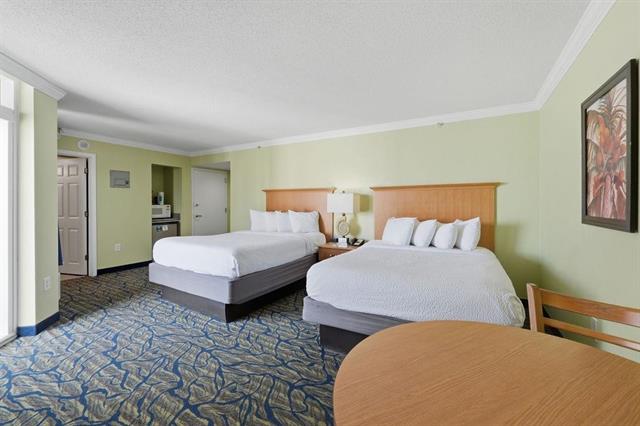
 Not every condo in Myrtle Beach sells quickly. Some sit on the market for weeks or months — not because they're bad properties, but because they require a specific approach that most agents aren't equipped to execute.
Over the years, I've had dozens of experiences taking on listings that other agents couldn't move and getting them sold. Here are some of the patterns I've seen and what actually worked.
Case Study 1: The Building With a Bad Reputation
I once listed a unit in a building that had developed a reputation for noise, management problems, and declining maintenance. Previous listings in the building had expired or sold at steep discounts. The unit itself was in excellent condition — updated kitchen, direct ocean view, strong rental history — but buyers were steering clear because of what they'd heard about the building.
The solution wasn't to hide the building's issues. It was to quantify them and contextualize them. I pulled together data on recent HOA meeting minutes, the reserve fund status, and the new management company that had taken over six months prior. I created a one-page "building update" document that I proactively shared with every showing. By addressing concerns head-on rather than letting buyers discover problems on their own, I changed the dynamic. The unit sold within three weeks at full asking price to a buyer who had originally passed on the building.
Case Study 2: The Overpriced Listing That Went Stale
A seller came to me after their listing had sat for 90 days with another agent at a price that was aspirational at best. The unit had accumulated significant days-on-market stigma — buyers were asking "what's wrong with it?" rather than seriously evaluating it. The previous agent had done almost nothing to address the stale perception.
I took the listing off the market for ten days, updated the photos with new staging and better lighting, refreshed the listing description, and relaunched at a price that was more tightly aligned with recent comparable sales. Within the first week back on market, we had three showings and one offer. We closed 30 days later at 97% of the relisted price — which was still meaningfully higher than distressed comps from that building. See recent condo sales to get a sense of how properly priced properties perform versus stale listings.
Case Study 3: The Financing-Challenged Building
One of the most common challenges in the Myrtle Beach condo market is buildings that are considered "non-warrantable" — meaning Fannie Mae and Freddie Mac won't back conventional loans for units there. This dramatically limits the buyer pool because most people can't pay cash or secure portfolio financing. I had a listing in exactly this situation.
The strategy was to identify the subset of buyers most likely to either pay cash or have access to alternative financing — specifically investors and second-home buyers from high-net-worth backgrounds. I marketed the property directly to that audience through targeted outreach and agent networking rather than relying on MLS exposure alone. We found a cash buyer within six weeks who was specifically looking for a building without the conventional financing restrictions that limit competition.
Case Study 4: The Unit With a Complicated Rental History
Some properties have rental income records that are difficult to verify or present cleanly — either because records weren't kept well, rental management changed hands, or the unit was owner-occupied for part of the period. Buyers who are buying primarily for rental income can be very cautious about incomplete rental histories.
In this case, I worked with the seller to reconstruct a credible rental income estimate using occupancy data from the management company, comparable units in the same building, and market-wide STR performance data for that building category. Rather than simply noting "rental history available upon request," we presented a formatted income projection with supporting documentation. The transparency built confidence, and the buyer proceeded with much less hesitation than they might have otherwise.
What These Cases Have in Common
Looking across these and similar situations, a few themes emerge consistently. First, most hard-to-sell condos have one specific obstacle — and identifying it precisely is more valuable than applying generic marketing fixes. Second, transparency about problems almost always works better than avoiding them. Buyers who discover issues on their own become suspicious of everything; buyers who are given accurate information upfront become more confident. Third, the right buyer for a difficult property is rarely the first person who comes through the door — it takes targeted marketing to find them.
If you have a condo that hasn't been moving, the answer is usually strategy, not price reduction. Getting the selling process right from the beginning — including honest pricing and proactive communication — is what separates a successful sale from a prolonged frustration.
Frequently Asked Questions
What makes a Myrtle Beach condo "hard to sell"?
Common factors include non-warrantable financing status, high HOA fees relative to comps, building reputation issues, pending or recent special assessments, a history of deferred maintenance, unit conditions that are significantly below building average, and stale listings that have accumulated days-on-market stigma. Each of these requires a different strategy to overcome.
Should I reduce my price if my condo has been sitting on the market?
Not necessarily. Price reduction is often the first instinct, but it's sometimes the wrong tool. If the underlying issue is marketing, presentation, or buyer access, reducing the price won't fix the problem — it will just lower what you net. A full reassessment of the listing strategy, photos, and target buyer profile should come before any price change.
How long is too long for a Myrtle Beach condo to be on the market?
In an active market, a well-priced and well-marketed condo should be generating serious interest within the first 30 days. Beyond 60 days, buyer perception of the property typically starts to erode regardless of its actual quality. At 90 days or more, a meaningful intervention — relisting, repricing, or restaging — is usually needed to reset market perception.